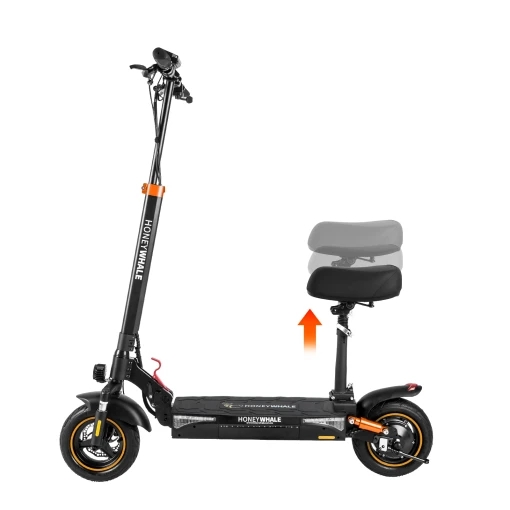

Start with the amount you can spend on the scooter, then keep room for protective gear, secure storage, delivery and routine care. In our range, you can build a useful shortlist at several price points without treating every step up as a compulsory upgrade.
At the prices checked on 8 October 2026, our starting picks are E9 PRO, E9T and M2 MAX below NZ$600; M1 MAX below NZ$700; E9 MAX and E9 MAX-N below NZ$900; and T4-A below NZ$1,000. Around NZ$1,300, compare T4-B, F50 and T4B-N. Higher budgets bring T2C, F50-D, F100 and our larger performance models into the decision.
This guide describes our own range and the choices we would put on your shortlist. It is not an independent ranking of the whole New Zealand market.
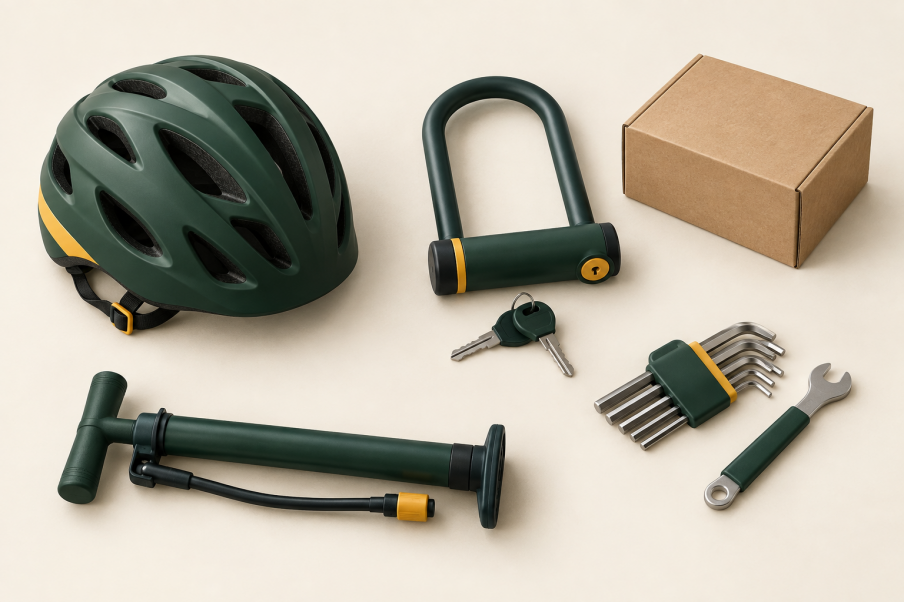
Budget for protective gear, secure storage, delivery and routine care as well as the scooter. AI-generated editorial illustration; items shown are examples, not an included bundle.
Check your riding location before spending
The NZTA low-powered vehicle requirements include a combined rated motor-output limit of 300W for exempt e-scooters, alongside other design conditions. Establish where the exact model may lawfully be used before choosing it for commuting or delivery work. A restricted speed setting does not establish eligibility on its own.
Our shortlist by scooter budget
Prices below are NZD, including GST, from our official catalogue on 8 October 2026. These are scooter prices; delivery and any equipment you need are separate. All listed models showed in-stock status in that catalogue snapshot. Recheck the selected variant and checkout before paying.
| Scooter budget | Models to shortlist | How to narrow the choice |
| Up to NZ$600 | E9 PRO — NZ$499; E9T — NZ$549; M2 MAX — NZ$599 | Compare the entry-level frames and suspension layouts, rather than buying on price alone |
| NZ | M1 MAX — NZ$699 | Our next step for buyers wanting the M1 MAX frame, 10-inch tyres and suspension combination |
| NZ | E9 MAX — NZ$799; E9 MAX-N — NZ$899 | Compare E9 MAX front suspension with the MAX-N front-and-rear arrangement |
| NZ | T4-A — NZ$999 | A seated option with 10-inch tubeless tyres and front/rear suspension |
| NZ | T4-B — NZ$1,199; F50 — NZ$1,199; T4B-N — NZ$1,299 | Choose around seat, storage and frame requirements; T4B-N lists a rear storage container |
| Around NZ$1,600 | T2C — NZ$1,599 | Consider it when a dual-motor configuration is one of your requirements |
| NZ | F50-D — NZ$1,699; F100 — NZ$1,899 | F50-D is a dual-motor choice; F100 uses a rear motor and succeeds H4 |
| Above NZ$2,000 | T4-D — NZ$2,099; T8 MAX — NZ$2,099; G4 MAX — NZ$2,599; GT1 Mini — NZ$2,399; GT1 — NZ$3,899 | Compare the exact frame, storage and hardware you need; these are distinct choices, not interchangeable upgrades |
G2 PRO, G3 PRO and T4V form a separate single-motor performance shortlist at the prices shown later in this guide. A scooter costing NZ1,600” row, rather than being described as below NZ$1,500.
Below NZ$600: E9 PRO, E9T or M2 MAX?
We would start with these three when price and handling matter most. E9 PRO is the lowest-priced example at the checked price. E9T adds another suspension-equipped option; M2 MAX lists front and rear suspension and indicators. Decide which arrangement fits your needs before stretching the budget.
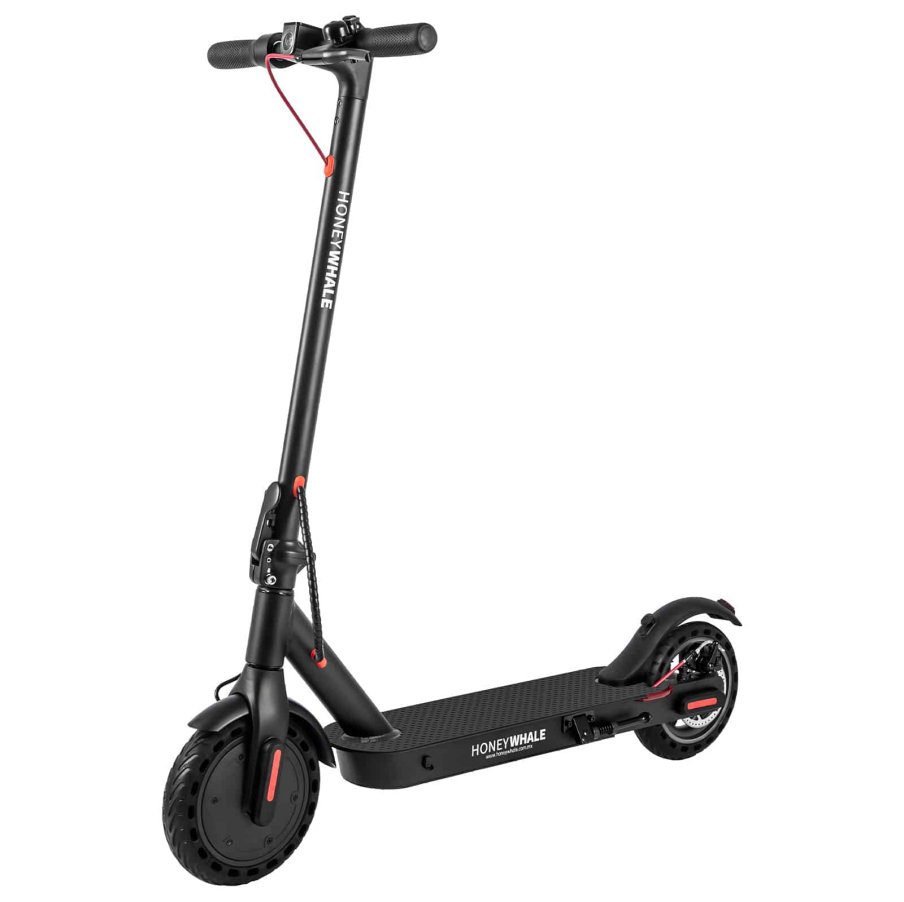
Official E9 PRO product photograph. Check the purchase page for the current specification.
Check the exact load limit, folded size and listed weight on each model page. A low price does not answer whether you can carry it or whether your intended riding location is suitable.
Up to NZ$700: make room for M1 MAX
M1 MAX is our next model to compare at NZ$699. Its listed 10-inch pneumatic tyres and front/rear suspension make it a useful step to consider when those are the features you want. Test the fit and handling, and think about where you will keep it, before deciding that a larger model is better for you.
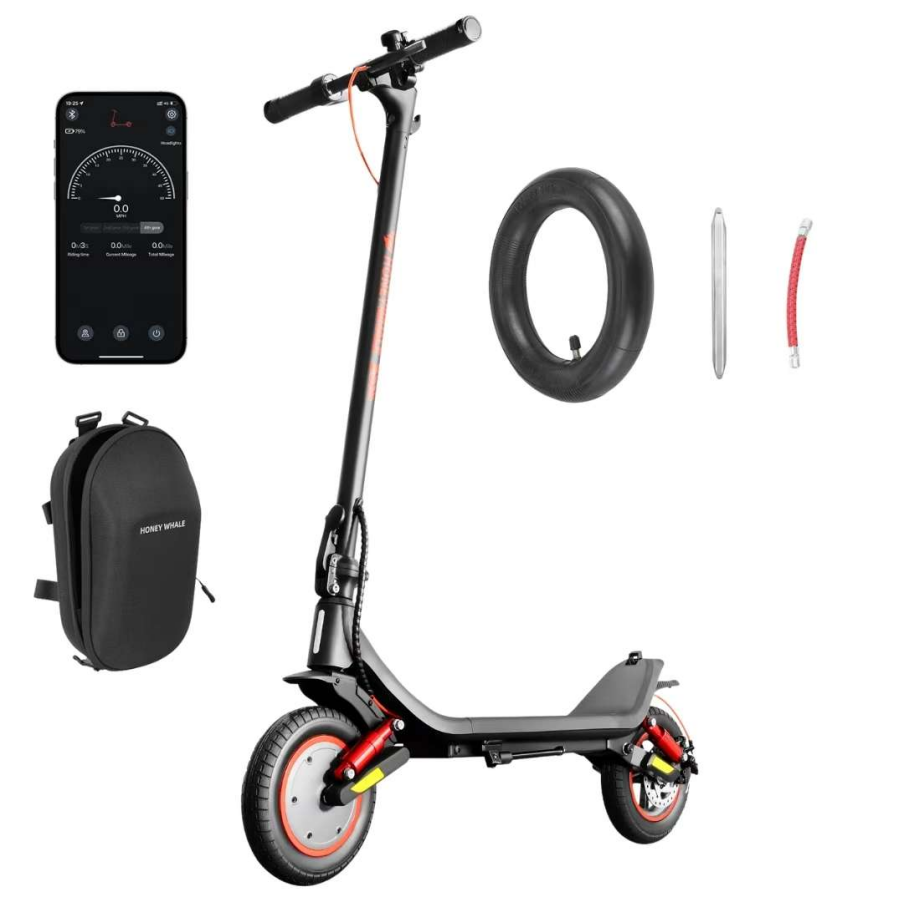
Official M1 MAX gallery image showing its frame and suspension layout. Check the purchase page for current bundle contents.
Up to NZ$900: compare E9 MAX and E9 MAX-N
These are our two E9-family picks in this band. E9 MAX lists front suspension; E9 MAX-N lists front and rear suspension. Compare the actual configuration and carrying weight rather than assuming the model suffix explains everything.
Our guide to advertised range and real riding conditions explains why hills, rider load, speed and weather change the distance you may get. Different advertised range figures are not a controlled comparison between models.
If your journey includes public transport, read our Auckland bus and ferry guide and recheck the operator’s current carriage conditions before committing to a scooter you expect to take aboard.
Up to NZ$1,000: T4-A for a seated shortlist
At NZ$999, T4-A is the model we would put on a seated shortlist in this price band. Its purchase page lists 10-inch tubeless tyres and front/rear suspension. Compare riding position, access to storage and the full dimensions with the lighter models above.
Up to NZ$1,300: T4-B, F50 and T4B-N
This is a useful comparison when the choice turns on seat, storage or frame layout. T4-B and T4B-N offer seated configurations; T4B-N lists a rear storage container. F50 provides another frame and suspension combination, with a touch display.
For anyone considering a scooter for food delivery, establish the lawful riding setting and relevant work requirements first. Then compare load, secure storage, maintenance and charging arrangements. A seat or larger battery alone does not establish suitability for a delivery platform or a public-road route.
Around NZ$1,600: the dual-motor T2C
T2C belongs on the shortlist when you specifically want a dual-motor model. Its official page lists front and rear motors, 10-inch tubeless tyres and front/rear spring suspension. It is listed at NZ$1,599 in our 8 October catalogue snapshot. Prices can change, so use the current purchase page when deciding how far to stretch your budget.
Up to NZ$1,900: F50-D or F100?
These newer models answer different preferences. F50-D uses front and rear motors. F100 uses a rear motor and is described on our official page as the new version of H4. Compare the layouts, listed weight and handling instead of treating the similar price range as a reason to choose either one automatically.
The F50-D showed in-stock status in the 8 October catalogue snapshot. That replaces the old September backorder example in this guide; it does not promise stock for a future order.
A separate single-motor performance shortlist
If you want to compare our larger single-motor models, start with G3 PRO — NZ$1,599; T4V — NZ$1,699. Their tyre and frame layouts differ, and their prices overlap other budget bands.
G3 PRO lists 12-inch tyres; T4V lists 11-inch tyres. Those are configuration differences, not a measured ranking of handling, hill climbing or stunt performance. Choose for a permitted riding setting and your experience with the exact model.
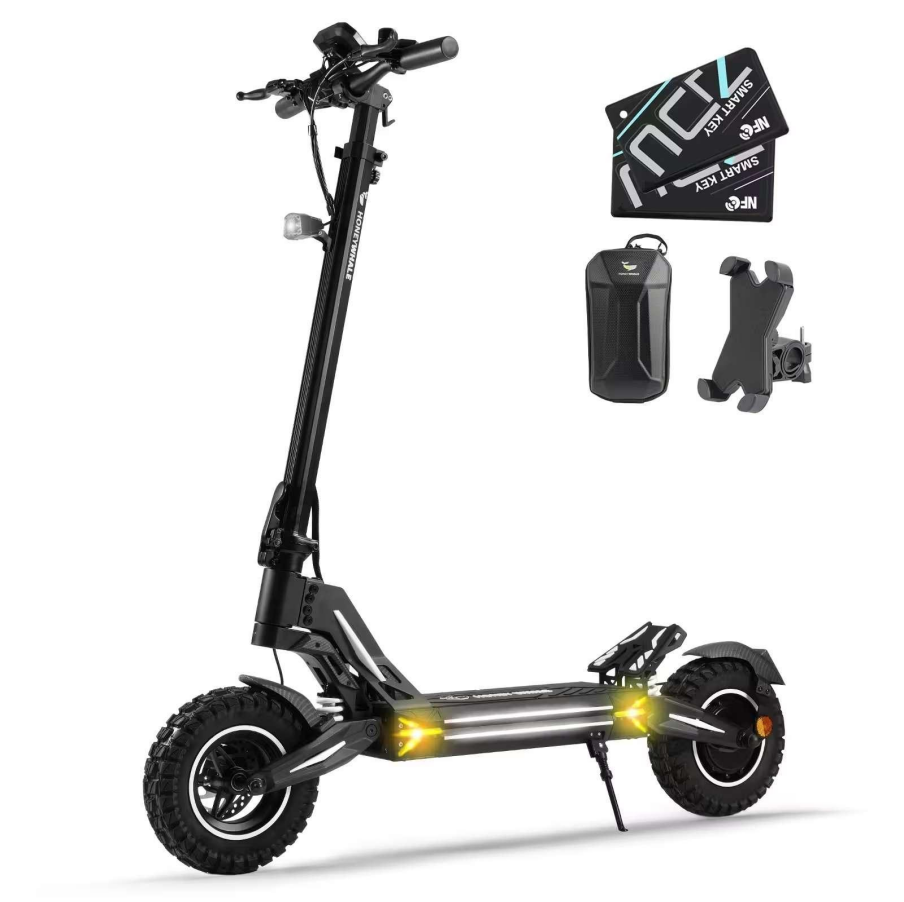
Official G3 PRO gallery image showing the tyre and frame layout. Check the purchase page for current bundle contents.
Above NZ$2,000: choose the exact performance model
T4-D, T8 MAX, G4 MAX and GT1 Mini are the models we would compare before stepping to the flagship GT1. Start with dimensions and the features you need rather than selecting the most expensive scooter by default. GT1 Mini offers a distinct compact design within the GT family; “Mini” does not mean it will be easy to carry upstairs.
Our GT1 vs GT1 Mini comparison gives you a starting point for the hardware differences. Recheck the current product page for the selected model and variant.
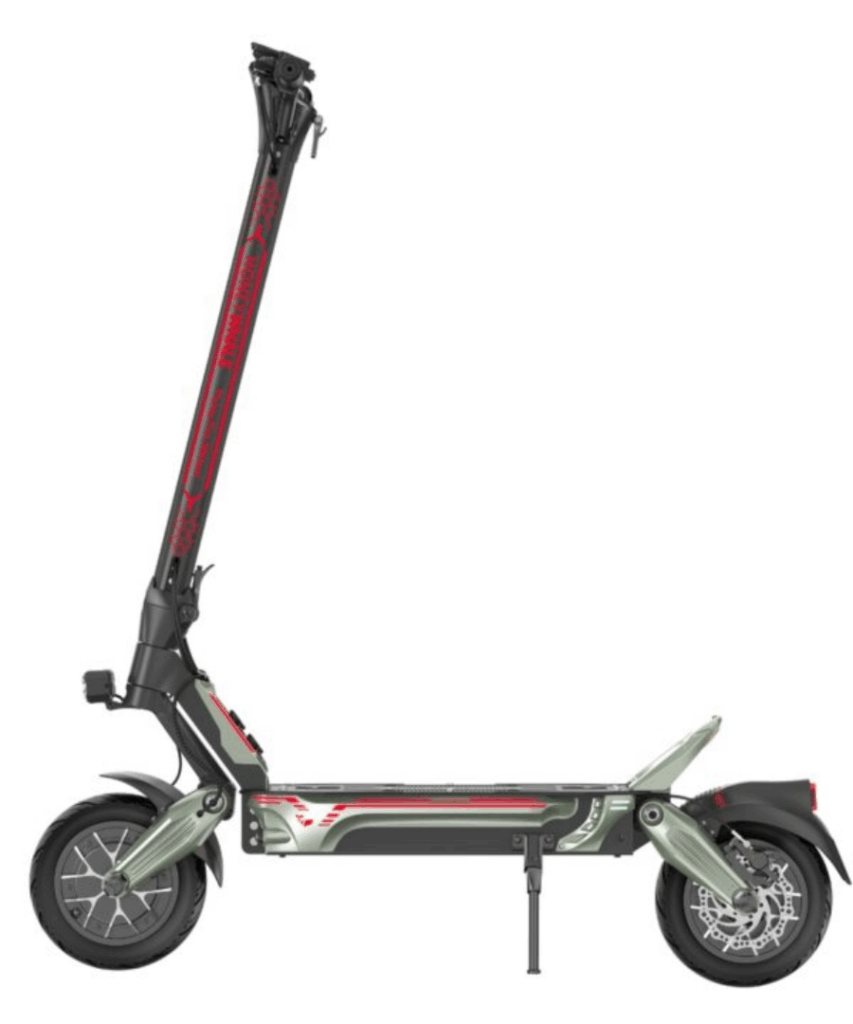
Official GT1 Mini product photograph. Include storage and handling in a higher-budget decision.
Budget for ownership as well as the purchase
Ask for model-specific costs where they matter. A generic annual maintenance allowance can look precise while telling you very little about the scooter you will own.
A replacement charger should be selected for compatibility, not price alone. WorkSafe’s purchasing guidance recommends checking English instructions, a suitable NZ plug and an input-voltage rating that includes 230V; its charging advice is to use the original charger supplied with the product.
| Cost to check | What to establish |
| Helmet and protective gear | What you need for your intended use, and what you already own |
| Lock and secure storage | A compatible way to secure the scooter and somewhere suitable to keep it |
| Delivery | The charge for your address and selected item, shown before payment |
| Tyres and brakes | Compatible consumables, availability and the labour cost if you need help fitting them |
| Battery or charger replacement | The exact compatible part and current quotation; do not assume one model’s parts fit another |
| Servicing | What the model needs, what you can reasonably check and what should go to a technician |
Our electric scooter maintenance checklist for NZ riders gives you a practical starting point for tyres, brakes, folding parts and battery care. Use it to understand the work involved before comparing ownership costs.
Your storage arrangement also needs to work for charging. Fire and Emergency New Zealand advises keeping e-scooters clear of exits while charging and, where possible, away from living spaces. Confirm that you have a suitable location before committing to a model that occupies more room.
Separate ordinary upkeep from a possible product fault. Consumer Protection’s CGA guidance explains that consumer guarantees for covered purchases apply regardless of store or manufacturer warranties. Check those rights before assuming a fault outside a written warranty period must become an out-of-pocket repair.
For a used scooter, ask about battery condition, charger compatibility, damage, available parts and any remaining coverage. A low asking price is difficult to assess when the cost of putting the scooter into usable condition is unknown. We have not included used-market prices in the table because condition makes those comparisons less direct.
Choose a budget you can explain
Set the total amount available for the purchase, then deduct gear, delivery and other immediate needs. Use the table to shortlist one or two models within the amount left. Spend more when you can explain the feature or practical requirement the extra money addresses.
Browse our current electric scooter range and open the exact model pages in your shortlist. Check price, variant, availability, lawful use and handling before you pay.
References
Product prices in the budget shortlist were read from our official product catalogue on 8 October 2026. The listed prices are a dated NZD snapshot, not a future price promise. NZTA, Fire and Emergency New Zealand and Consumer Protection guidance was reviewed for this revision. WorkSafe and Auckland Transport text retains its 22 September 2026 check date; recheck both before CMS publication.
- NZ Transport Agency Waka Kotahi — Low-powered vehicle requirements — E-scooter classification and rated motor-output requirements.
- Auckland Transport — Bikes & public transport — Folding and carriage requirements for mixed journeys.
- WorkSafe New Zealand — Safe use of lithium-ion batteries and battery products — Charger compatibility and checks before purchasing electrical equipment.
- Fire and Emergency New Zealand — Lithium-ion battery safety — Charging locations, exits and practical storage planning.
- Consumer Protection New Zealand — Consumer Guarantees Act — Consumer guarantees alongside store or manufacturer warranties.