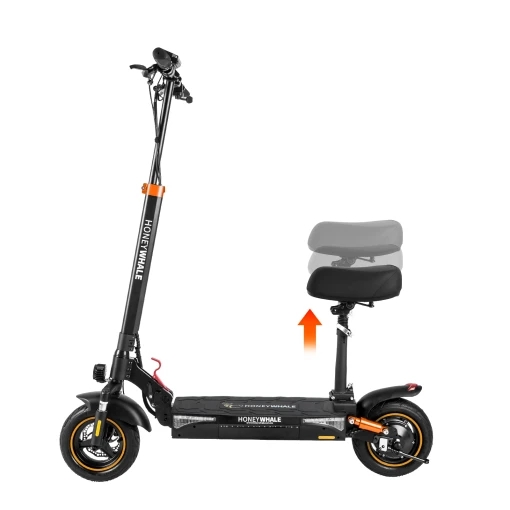

“Mini” is relative. Both models are dual-motor performance scooters, not lightweight commuters.
We would begin with storage. GT1 offers the larger battery and highest output; GT1 Mini saves 6.8kg while keeping hydraulic suspension and brakes at both ends.
If stairs, a train platform or daily lifting define the trip, we would steer you away from both.
| HoneyWhale GT1 | HoneyWhale GT1 Mini |
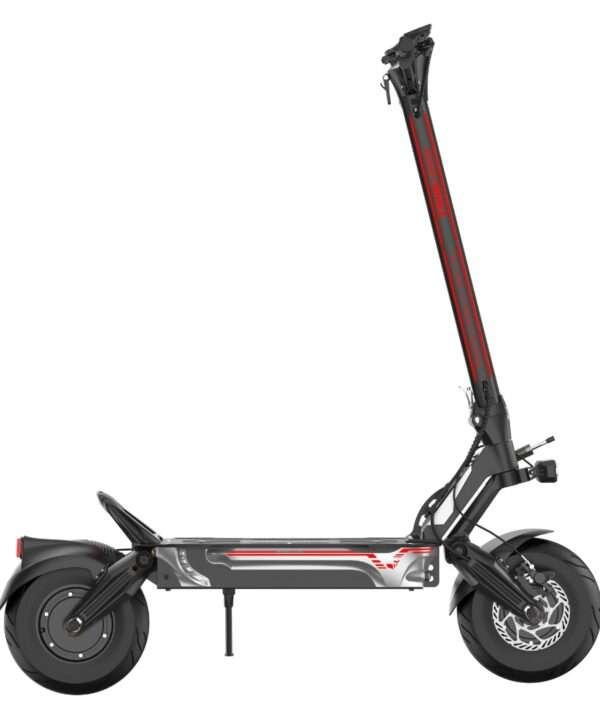 | 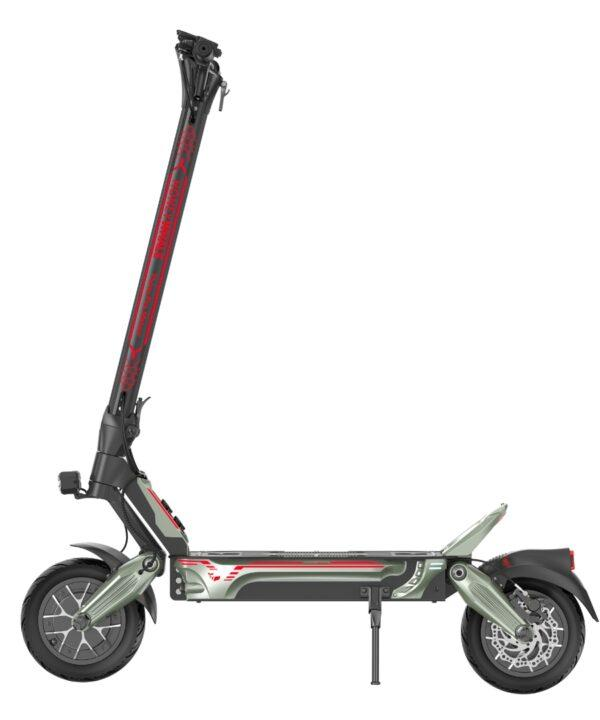 |
Official photographs from the GT1 and GT1 Mini product pages. The panels preserve each source image’s proportions and are not a dimensional scale comparison.
GT1 vs GT1 Mini: The Short Answer
Garage space usually settles this faster than the badge. GT1 means the largest battery, the highest motor output, 12-inch tyres and a steering damper that the Mini’s live listing does not include. GT1 Mini means a 6.8kg saving while retaining two motors and hydraulic hardware at both ends. At 34.75kg, though, the word “Mini” remains strictly relative.
HoneyWhale GT1 vs GT1 Mini Specifications
The figures below were checked against the live GT1 and GT1 Mini product pages on Jul 27, 2026. Speed and range are “up to” claims, not guaranteed results. Two-port charging and adjustable damper resistance were confirmed separately by HoneyWhale’s product team.
| Feature | HoneyWhale GT1 | HoneyWhale GT1 Mini |
| Position in range | Full-size performance flagship | More compact GT performance model |
| Rated motor output | 3000W combined, 1500W × 2 | 2400W combined, 1200W × 2 |
| Peak motor output | Up to 4000W combined | Up to 3000W combined |
| Listed top speed | Up to 100km/h | Up to 65km/h |
| Listed range | Up to approximately 100km | Up to approximately 70km |
| Battery | 67.2V / 29.4Ah | 58.8V / 18.2Ah |
| Charging | Up to 8 hours listed; two charging ports | Up to 8 hours listed; two charging ports |
| Tyres | 12-inch tubeless | 11-inch tubeless |
| Suspension | Front and rear hydraulic | Front and rear hydraulic |
| Steering damper | Listed; adjustable resistance confirmed by HoneyWhale’s product team | Not listed on the live product page |
| Brakes | Front and rear hydraulic | Front and rear hydraulic |
| Ambient lighting | Multicolour LED atmosphere lighting | Multicolour LED atmosphere lighting |
| Water-resistance rating | IPX5 | IPX5 |
| Maximum listed load | 150kg | 150kg |
| Scooter weight | 41.55kg | 34.75kg |
| Best fit | Maximum GT specification and battery capacity | Relative manageability without leaving the performance category |
The Mini gives up output, battery capacity, tyre size and the GT1’s listed steering damper, but retains the same broad hydraulic suspension and braking format. It is not a basic scooter with a GT badge.
Power: What Does the Extra Output Change?
The arithmetic is clear: GT1 is rated at 1500W per wheel and up to 4000W peak combined; Mini is rated at 1200W per wheel and up to 3000W peak.
Buy the GT1 when that extra reserve and its larger battery solve a known need. The Mini’s 2400W combined rated output is already far beyond the commuter category.
Unused specification brings no prize. More available power also demands judgement, space and respect for braking and surface conditions.
Battery and Range: Bigger Numbers Need Context
The GT1 battery is 67.2V / 29.4Ah; the Mini’s is 58.8V / 18.2Ah. Their pages claim up to roughly 100km and 70km respectively, not guaranteed route results.
Rider weight, hills, headwind, temperature, tyre pressure, motor mode and acceleration all affect range. Map a demanding day and leave margin. Choose GT1 if the Mini’s practical reserve looks insufficient; otherwise the larger pack may simply add scooter to store and move.
For route-specific guidance, contact HoneyWhale NZ with rider weight and expected terrain.
Charging is not a major separator between them. HoneyWhale’s product team confirms that both scooters have two charging ports, allowing two compatible chargers to be used when a quicker turnaround is needed. The public pages currently list an “up to 8 hours” charge time but do not publish separate two-charger times, and neither listing should be read as proof that a second charger is included. Use only HoneyWhale-supplied or specifically approved compatible chargers.
Size and Weight: “Mini” Is Relative
GT1 weighs 41.55kg and Mini 34.75kg. The 6.8kg saving helps when repositioning the scooter, passing a doorway or loading a suitable vehicle, but it does not make Mini a carry-on commuter.
At nearly 35kg, Mini still needs planned storage. Think through the awkward part of the route — the stairs, doorway, turn or boot lip — before ordering either model.
| HoneyWhale GT1 folded | HoneyWhale GT1 Mini folded |
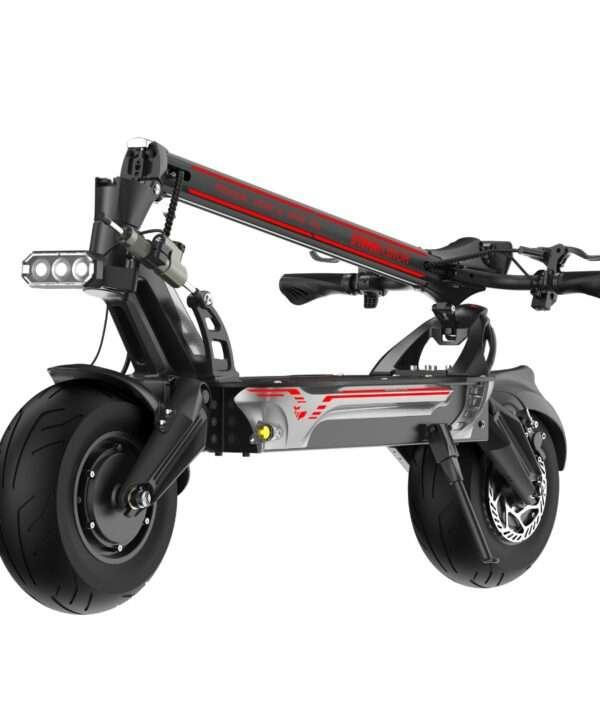 | 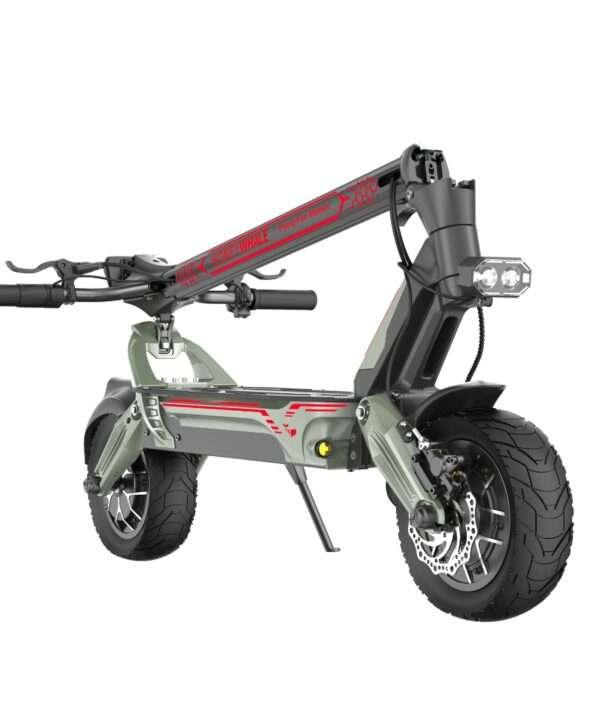 |
Official folded-product photographs from the GT1 and GT1 Mini galleries. Use the verified weights and dimensions above for planning; the photographs are not displayed at a common engineering scale.
Suspension, Steering, Brakes and Tyres
This is where the two models are closer than their power figures suggest.
Both use front-and-rear hydraulic suspension. Both use hydraulic brakes on the front and rear wheels. Both run tubeless tyres, although the GT1 moves up to 12 inches while the Mini uses 11-inch tyres.
The steering hardware creates a more specific difference. The GT1 listing includes a steering damper mounted across the front assembly; the Mini listing does not. HoneyWhale’s product team says the GT1 damper resistance is adjustable.
A damper adds resistance to rapid handlebar movement. That can help settle sudden steering inputs or oscillation, but it cannot guarantee that speed wobble will never occur. A peer-reviewed motorcycle steering-damper design study describes the same damping trade-off on another powered two-wheeler: too little damping may leave oscillation uncontrolled, while too much can make steering unnecessarily heavy. It is useful engineering context rather than an independent test of either HoneyWhale scooter.
The GT1’s larger tyres, damper and greater overall mass support its flagship positioning. The Mini retains the same broad suspension and braking formula in a smaller package. For a buyer who cares more about relative manageability than maximum output, that makes the Mini a credible choice rather than a consolation prize.
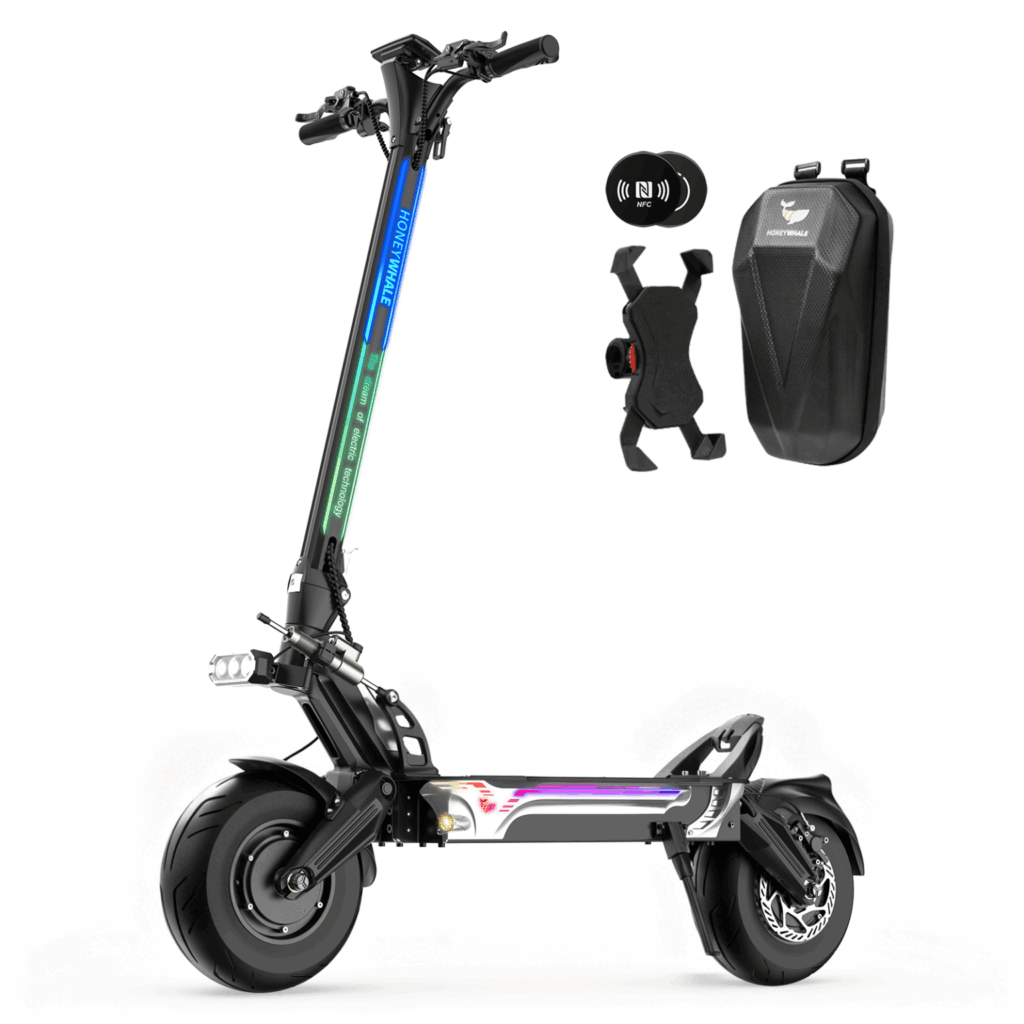
The GT1 steering damper is visible above the front suspension assembly. Official product photography from the GT1 product page.
The pre-ride routine is the same for either scooter. Squeeze both brake levers, look at the tyres and put a hand on the stem and folding lock before setting off. Pads wear, tyre pressure drifts and fasteners can work loose. The intervals and fuller checklist are in HoneyWhale’s Maintenance & Care guide.
Everyday Features: More Similar Than Different
Open the two listings and the shared equipment list is long: IPX5-rated water resistance, NFC unlocking, indicators at both ends, an LCD display, a folding frame and multicolour LED atmosphere lighting. Riders can also switch between one motor and two.
The coloured stem and deck illumination gives both scooters a distinctive after-dark look. It is decorative lighting, not a replacement for the headlight, indicators, reflective gear or careful positioning around other people.
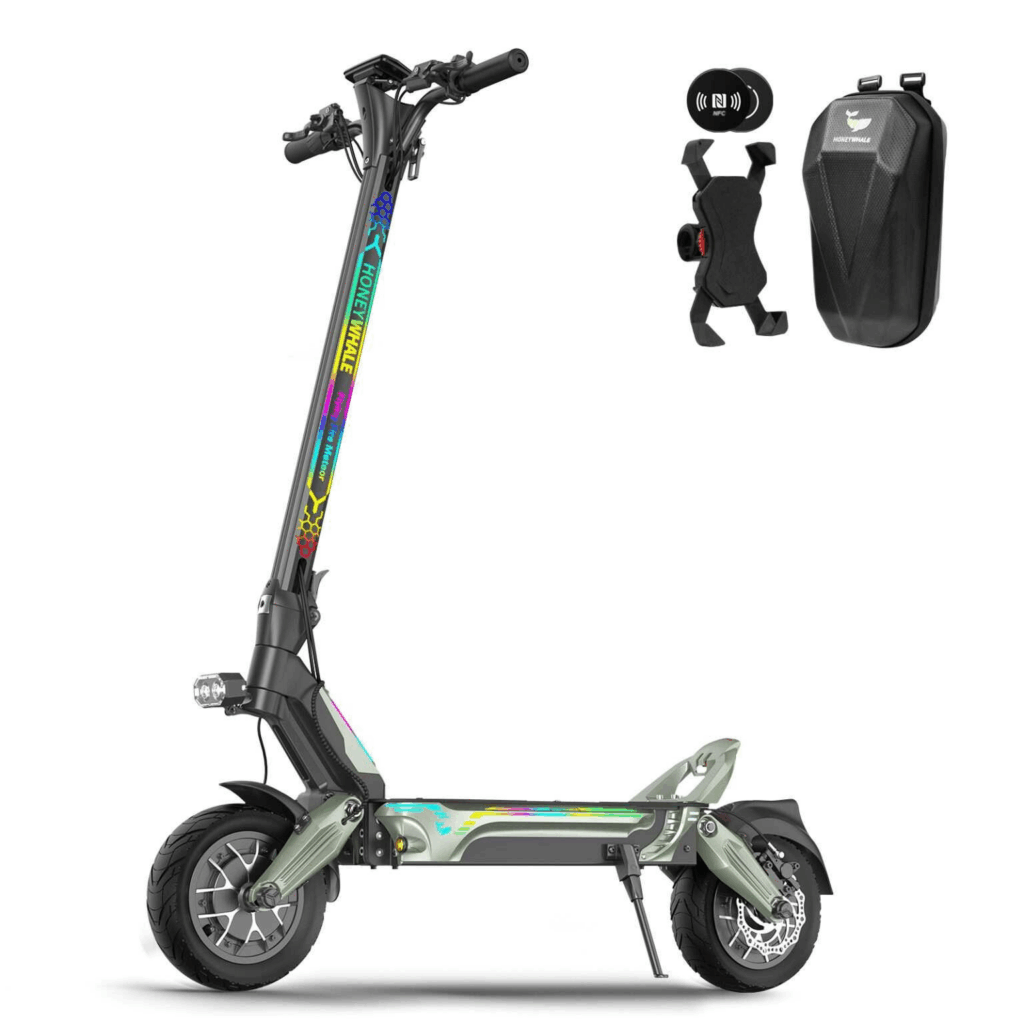
Official GT1 Mini product photography showing the illuminated stem and deck trim. Source: HoneyWhale GT1 Mini product page.
These features make day-to-day ownership easier, but they do not cancel the basic differences in scale. A folding mechanism makes a 41.55kg scooter more compact to store; it does not make it light. IPX5 provides a defined level of water resistance; it does not turn deep water or careless storage into a good idea.
Owners should dry either scooter after wet use and avoid charging while the scooter or charging area is damp. The maintenance page provides the current HoneyWhale care guidance.
Charging needs a routine of its own. Fire and Emergency New Zealand advises using the supplied charger or compatible certified equipment and keeping an e-scooter away from exits while it charges. Its preference, where practical, is an outside area or a garage, shed or carport separated from living space.
Who Should Choose the HoneyWhale GT1?
The full GT1 is the stronger fit when the buyer has a clear reason to want the top specification.
Choose the GT1 if:
- you want the largest battery and highest-output model in the GT range;
- the 12-inch tyre platform is part of the appeal;
- you are comfortable managing a 41.55kg scooter;
- you have secure, level storage;
- you are an experienced performance-scooter rider; and
- you have private property or another legally permitted place for its performance.
The GT1 also makes sense for a heavier rider who wants the model’s listed 150kg load capacity combined with the larger battery and overall platform. Load capacity is not the only selection factor, however. Route, storage, braking demands and rider experience still matter.
Who Should Choose the HoneyWhale GT1 Mini?
The Mini is the more balanced GT choice when maximum specification is not the main goal.
Choose the GT1 Mini if:
- you want GT-series hydraulic suspension and braking in a smaller package;
- a 6.8kg reduction from the full GT1 materially helps storage or handling;
- the listed 70km maximum range is more aligned with your planned use;
- you prefer 11-inch tyres and a less imposing frame; and
- you want performance well above a commuter model without moving to the largest GT platform.
The GT1 Mini is easier to manage than the GT1. It is not easy to carry in the way a much lighter commuter scooter can be. Keeping that distinction clear prevents an expensive mismatch.
When Should You Choose Neither?
A station run is the simplest way to rule both scooters out. Even the Mini weighs 34.75kg; neither belongs in the same conversation as a machine intended to be lifted onto a train or parked neatly beside a desk. Start again with a commuter-focused HoneyWhale model.
The same applies if the rider has no appropriate place to use a high-power scooter. Buying a performance model first and working out its legal use later reverses the order of a good decision.
Start with the route and environment. Then choose the machine.
NZ Road Rules: Both Models Need the Same Caution
Electrical certification can be genuine while public-road use is still prohibited. They are separate tests, and both GT models need that distinction stated plainly.
For the no-registration, no-driver-licence e-scooter framework, NZ Transport Agency Waka Kotahi gives a combined maximum motor-output ceiling of 300W. Its guidance refers to rated or nominal output and places scooters above that ceiling among vehicles that cannot be used on the road because they have difficulty meeting the applicable requirements. The 2023 Gazette notice uses the same 300W ceiling alongside its other design conditions. That notice is due to expire on Sept 30, 2028.
Now compare the arithmetic: 3000W combined for GT1 and 2400W for GT1 Mini, against 300W. A selectable 25km/h default mode does not change those rated-output figures.
Use unrestricted modes only on private property or where legally permitted, and check current official guidance before riding. HoneyWhale’s Rules & Regulations page provides a convenient internal starting point, but NZTA and the underlying legislation remain the authorities.
Certification, Warranty and Local Support
The live product pages identify EESS registration, SAA approval and Global-Mark certification for both GT models. Our article on HoneyWhale electrical safety certification explains what those systems address.
WorkSafe New Zealand’s summary of the 2025 Electricity Safety amendments explains that personal e-transporters are covered by the Electricity (Safety) Regulations and that New Zealand’s recognition of products recognised under EESS or the NSW scheme remains unchanged. This electrical framework is separate from the transport rules governing where a particular scooter may be ridden.
HoneyWhale also publishes detailed warranty terms, including different periods and conditions for motors, batteries and other parts. Buyers should read those terms rather than relying on a headline warranty length. Local service options in Auckland and Christchurch, parts support and remote assistance are available through the HoneyWhale NZ team, subject to the published policy and the circumstances of the issue.
Final Verdict: GT1 or GT1 Mini?
The GT1 is the correct choice when the buyer wants the complete flagship package and can genuinely use its larger battery, higher output, 12-inch platform and steering damper.
The GT1 Mini is the smarter choice when the core GT experience matters more than having the largest numbers. It keeps the dual motors, hydraulic suspension and hydraulic braking while cutting 6.8kg from the full GT1.
After all the numbers, one question remains: will you genuinely use the GT1’s extra battery, output, steering control, size and weight? If the answer is yes, that is exactly why the flagship exists. If the answer is no, the Mini leaves less scooter to store and move while keeping the hardware that defines the GT range.
Before deciding, compare the live HoneyWhale GT1 and HoneyWhale GT1 Mini pages, check your storage access and talk to us about the environment in which you intend to ride.
References
- HoneyWhale GT1 product page
- HoneyWhale GT1 Mini product page
- NZ Transport Agency Waka Kotahi: Low-powered vehicle requirements
- New Zealand Gazette: E-Scooters (Declaration Not to be Motor Vehicles) Notice 2023
- Fire and Emergency New Zealand: Lithium-ion battery safety
- WorkSafe New Zealand: Changes to Electricity Safety Regulations for electrical products
- Machines: Design of a Motorcycle Steering Damper for a Safer Ride
- HoneyWhale electrical safety certification guide
- HoneyWhale Maintenance & Care
- HoneyWhale Warranty Policy