
Most people compare electric scooters by speed, range, suspension and price.
That makes sense. Those are the things riders feel first.
But an electric scooter is not just a frame with two wheels and a motor. It is also a battery-powered electrical product with a charger, wiring, controller, battery management system and charging habits that matter long after the first ride. If those parts are not taken seriously, the conversation about performance starts in the wrong place.
That is why HoneyWhale has taken a different path.
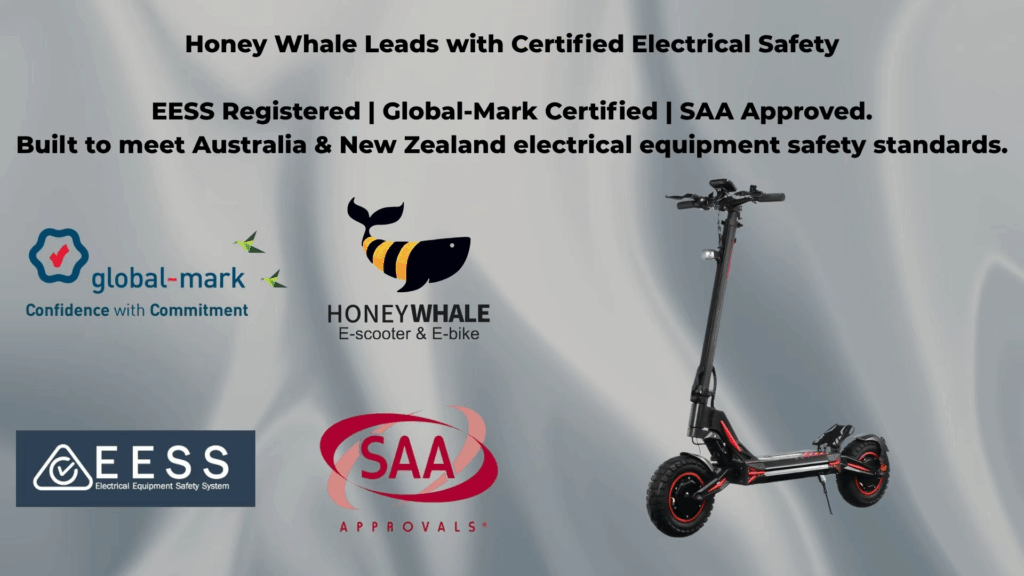
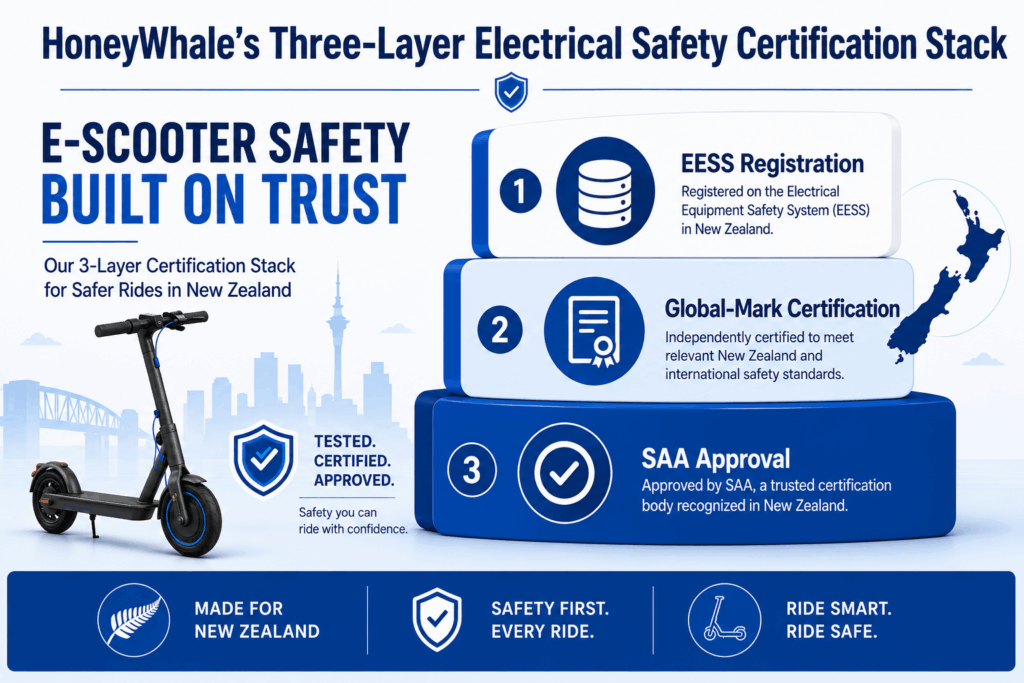
In May 2026, we completed EESS Registration, Global-Mark Certification and SAA Approval for our electric scooter range. To the best of our knowledge, we are currently the only New Zealand e-scooter brand to have completed this combination of electrical safety certification.
That is not just a badge for a product image.
It is a signal about how seriously we take the electrical side of e-scooter ownership.
Why Electrical Safety Certification Matters for E-Scooter Buyers
A scooter can look solid from the outside and still leave buyers with questions.
Is the charger suitable? Has the electrical equipment been assessed properly? Is there a responsible supplier behind the product? Is the brand willing to put its compliance work somewhere buyers can understand, not buried in vague marketing language?
Those questions matter more now because e-scooters are no longer niche gadgets. In New Zealand, they are part of daily commuting, short-distance travel, student transport and weekend riding. Riders store them in garages, apartments, offices and shared spaces. They charge them overnight, carry them into lifts and use them in wet weather.
That makes electrical safety more than a technical detail.
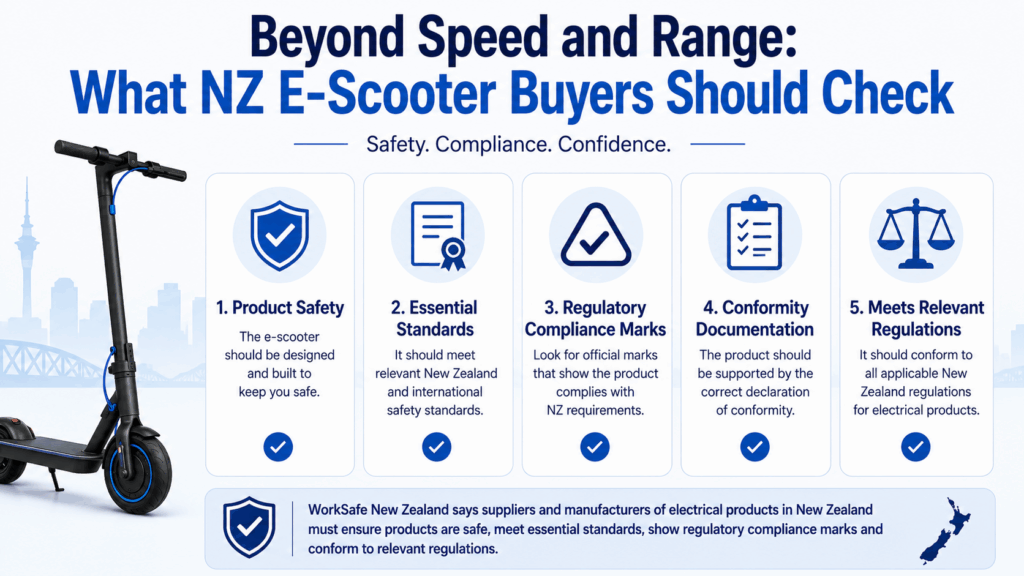
WorkSafe New Zealand tells suppliers and manufacturers that electrical products sold in New Zealand must be safe, allowed to be sold, meet fundamental safety requirements, and comply with relevant marks and regulations. That is the baseline serious brands should be working from, not something treated as an afterthought. (WorkSafe)
HoneyWhale’s view is simple: if we ask customers to trust our scooters for everyday transport, we should also give them stronger reasons to trust the electrical system behind the ride.
What EESS Registration Means
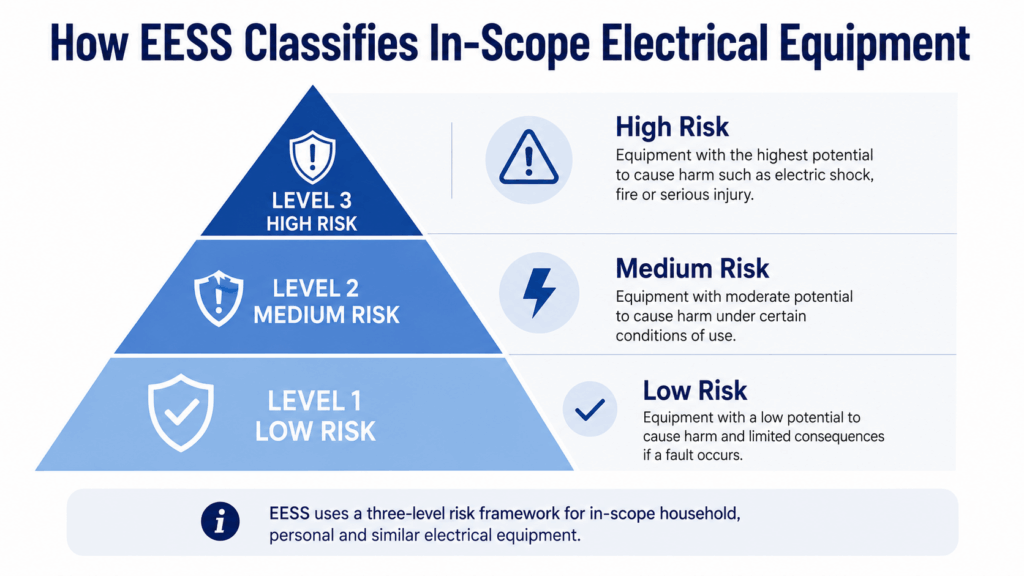
EESS stands for the Electrical Equipment Safety System.
It is a regulatory framework used across participating Australian and New Zealand jurisdictions to improve consumer safety around household electrical equipment. EESS outlines requirements for Responsible Suppliers and equipment registration through a centralised national database. (eess.gov.au)
That matters because certification should not live only inside a company folder. The EESS Registration Database is described as a gateway for in-scope electrical equipment certification in Australia and New Zealand, and it is accessible to both the public and electrical goods retailers. (eess.gov.au)
For buyers, the bigger idea is transparency.
A customer should not have to rely only on a product page saying “safe” or “high quality”. They should be able to understand which safety framework sits behind the product and why that framework exists.
HoneyWhale completing EESS Registration gives our New Zealand customers a clearer basis for trust before they buy.
What Global-Mark Certification Adds
EESS Registration is one part of the story. Global-Mark Certification adds another layer.
Global-Mark describes product certification as a way to demonstrate that a product complies with relevant local, national or international product standards. Its product conformance information also explains that certification can show a product has been independently confirmed to meet design requirements and relevant performance or quality assurance tests. (global-mark.com.au)
That independent layer is important.
Every brand can say its products are reliable. Fewer brands go through the extra process of having products assessed through recognised certification pathways. For customers, that distinction matters because it separates ordinary marketing from something more structured.
We do not see Global-Mark Certification as a slogan.
We see it as part of the evidence chain that should sit behind a modern electric scooter brand.
What SAA Approval Means
SAA Approval is another important part of the certification picture.
SAA Approvals states that it certifies electrical equipment to Australian and New Zealand standards to support compliance with legal requirements for manufacturing and selling electrical equipment in Australasia. Its legal requirements page also refers to AS/NZS 3820 as the essential safety requirement framework for low-voltage electrical equipment. (saaapprovals.com.au)
For an e-scooter buyer, that may sound technical. The practical meaning is easier to understand: the electrical equipment behind the scooter has gone through a recognised approval pathway instead of being treated like an unverified accessory.
That matters especially with battery-powered mobility products.
A charger is not just a charger. A battery is not just a battery. The way these parts are specified, tested, supplied and used affects the rider’s long-term ownership experience.
SAA Approval helps us give customers another reason to feel more confident before choosing a HoneyWhale scooter.
Why We Chose to Do the Certification Work
Certification takes time. It adds cost. It adds paperwork. It also creates pressure inside the business, because the product has to be ready for scrutiny beyond our own marketing claims.
We still chose to do it.
The reason is straightforward: New Zealand riders are becoming more careful. They want better scooters, but they also want better answers. They want to know whether a brand has local accountability. They want to know whether the product is backed by real compliance work. They want to know whether the charger, battery and electrical equipment have been taken seriously.
That is exactly where HoneyWhale wants to stand.
We are proud to be the only New Zealand e-scooter brand we know of to have completed EESS Registration, Global-Mark Certification and SAA Approval.
That sentence matters because it is not about being louder than other brands. It is about raising the standard customers should expect from the category.
What This Means for New Zealand Customers
A certified scooter does not remove the need for responsible riding, correct charging or regular maintenance.
It does give customers a better foundation before they buy.
When customers choose HoneyWhale, they are not only comparing motor power, tyre size or suspension. They are also choosing a brand that has invested in the electrical safety work behind the product. That matters whether the scooter is used for short urban rides, commuting, campus travel or weekend use.
It also helps customers ask better questions.
Instead of only asking “How fast does it go?” or “How far can it ride?”, buyers can ask:
Is the brand registered?
Has the product gone through recognised certification?
Does the company understand Australian and New Zealand electrical equipment expectations?
Is there local support if something needs attention?
Those are better buying questions.
They are also the questions HoneyWhale wants to answer clearly.
Electrical Safety Is Now Part of Product Quality
For too long, e-scooter quality has been discussed mainly through visible features.
Bigger battery. Stronger motor. Larger tyres. Dual suspension. Brighter lights.
Those things matter, but they are not the whole picture. The less visible parts are just as important: battery quality, charger compatibility, electrical design, supplier responsibility and compliance documentation.
That is where the market is heading.
Customers are becoming more informed. Regulators are paying closer attention to electrical equipment. Retailers and importers are expected to understand what they sell. WorkSafe’s electrical product guidance makes it clear that New Zealand suppliers and manufacturers have duties around safe products, compliance marks and relevant regulatory requirements. (WorkSafe)
For HoneyWhale, this certification milestone is not the end of the process. It is a new baseline.
We want customers to see electrical safety as part of product quality, not a separate technical topic that only matters after something goes wrong.
How Buyers Can Learn More
Not every customer wants to read certification systems in detail.
That is fine.
But for customers who do want to understand the framework, the official sources are available. The EESS website explains the Electrical Equipment Safety System and provides access to registration and certification information. WorkSafe New Zealand explains core electrical product safety requirements for New Zealand suppliers. SAA Approvals and Global-Mark also publish information about their certification roles and product conformance processes. (eess.gov.au)
We welcome that transparency.
A serious e-scooter brand should not be afraid of customers learning more about safety standards, registration systems or certification pathways. The more customers understand, the easier it becomes to tell the difference between a low-effort import and a brand that has done the work.
A Safer Standard for the Next Stage of E-Scooters in New Zealand
Electric scooters are growing up.
The market is no longer only about who can advertise the biggest number or the lowest price. Riders want performance, yes. But they also want trust. They want products that make sense for real homes, real charging habits, real weather and real daily transport.
HoneyWhale completing EESS Registration, Global-Mark Certification and SAA Approval is part of that shift.
It gives New Zealand customers a clearer reason to choose a brand that treats electrical safety as a core part of the product, not a footnote.
That is the standard we want to lead with.
Final Word
Speed gets attention. Range gets compared. Suspension gets tested on the first ride.
Electrical safety is quieter.
But it is one of the things that matters most once the scooter becomes part of everyday life.
At HoneyWhale, we are proud to have completed EESS Registration, Global-Mark Certification and SAA Approval. We are even prouder to bring that standard to New Zealand e-scooter customers at a time when riders deserve more transparency, more accountability and better reasons to trust the products they buy.
Explore HoneyWhale’s certified electric scooter range and choose a model built for real New Zealand riding, with electrical safety taken seriously from the start.
References
- Electrical Equipment Safety System. (n.d.). About the EESS. EESS. (eess.gov.au)
- Electrical Equipment Safety System. (n.d.). EESS Registration Database. EESS. (eess.gov.au)
- Global-Mark. (n.d.). Product conformance. Global-Mark. (global-mark.com.au)
- SAA Approvals. (n.d.). SAA Approvals. SAA Approvals. (saaapprovals.com.au)
- SAA Approvals. (n.d.). Legal requirements for electrical products. SAA Approvals. (saaapprovals.com.au)
- WorkSafe New Zealand. (n.d.). Electrical safety compliance. WorkSafe. (WorkSafe)
- WorkSafe New Zealand. (n.d.). Electrical marks. WorkSafe. (WorkSafe)