
Last checked: 26 Feb 2026 (based on publicly available guidance and reporting available at that time).
People look this stuff up when something feels off. Maybe a friend told you “that lane’s not for scooters,” or you saw conflicting advice online, or you’re about to buy and don’t want a regret purchase.
This page isn’t here to “certify” anything. It’s here to help you read the official sources properly, then make a sensible decision for how you actually ride.
Are e-scooters legal in New Zealand?
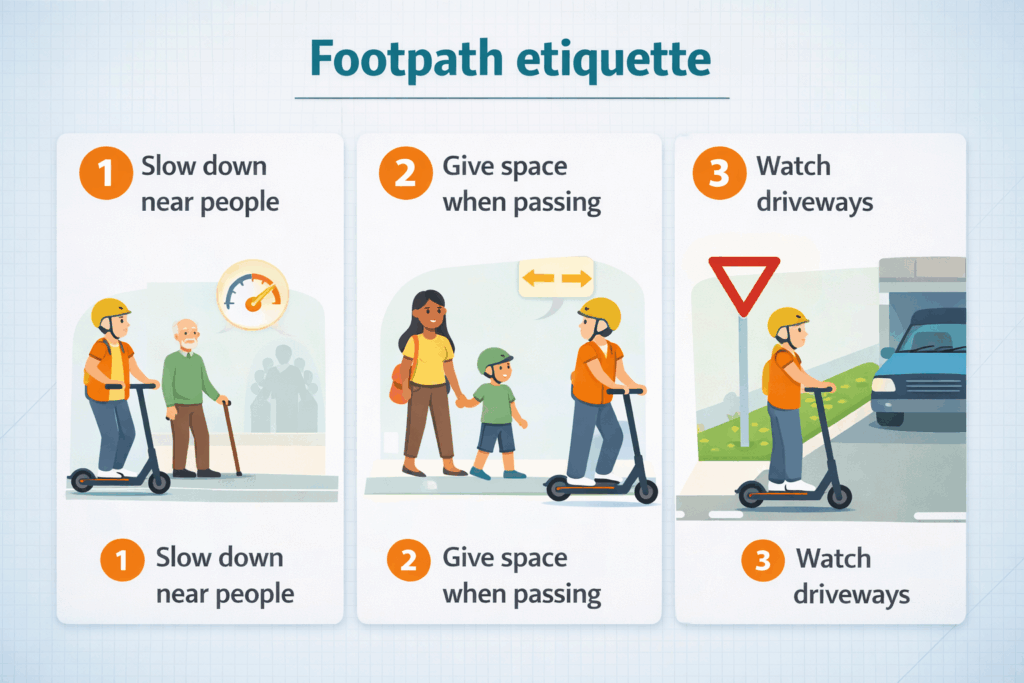
For most riders, the day-to-day rule is simple: NZTA guidance allows e-scooters on the footpath or the road.(NZTA)
The part that trips people up is not the footpath or the road—it’s the cyclists-only cycle lane exception NZTA mentions. If it’s clearly designated for cyclists only and forms part of the road, don’t assume scooters are included.(NZTA)
When you can’t tell at a glance, treat it like a “pause and check” moment: follow signage and markings, and take the conservative option.
How NZ legally classifies an e-scooter (and why buyers should care)
The legal anchor for e-scooter classification sits in a declaration published in the New Zealand Gazette.(New Zealand Gazette Notice 2023-au4565)
If you’ve read ten blog posts and they all summarise it slightly differently, that’s exactly why we point you back to the source. Wording changes, thresholds change, and sometimes the “popular summary” is just wrong. (New Zealand Gazette)
The Notice also has its own expiry details—so if you’re reading this years later, don’t rely on a cached interpretation. Open the current Notice and check what replaced it. (New Zealand Gazette)
Quick reality check: this guide explains how to think about risk and riding context. It does not certify any model as “legal everywhere.” (New Zealand Gazette)
Where you can ride: footpath vs road (and the cycle-lane exception)
Footpath: allowed, but shared space comes first
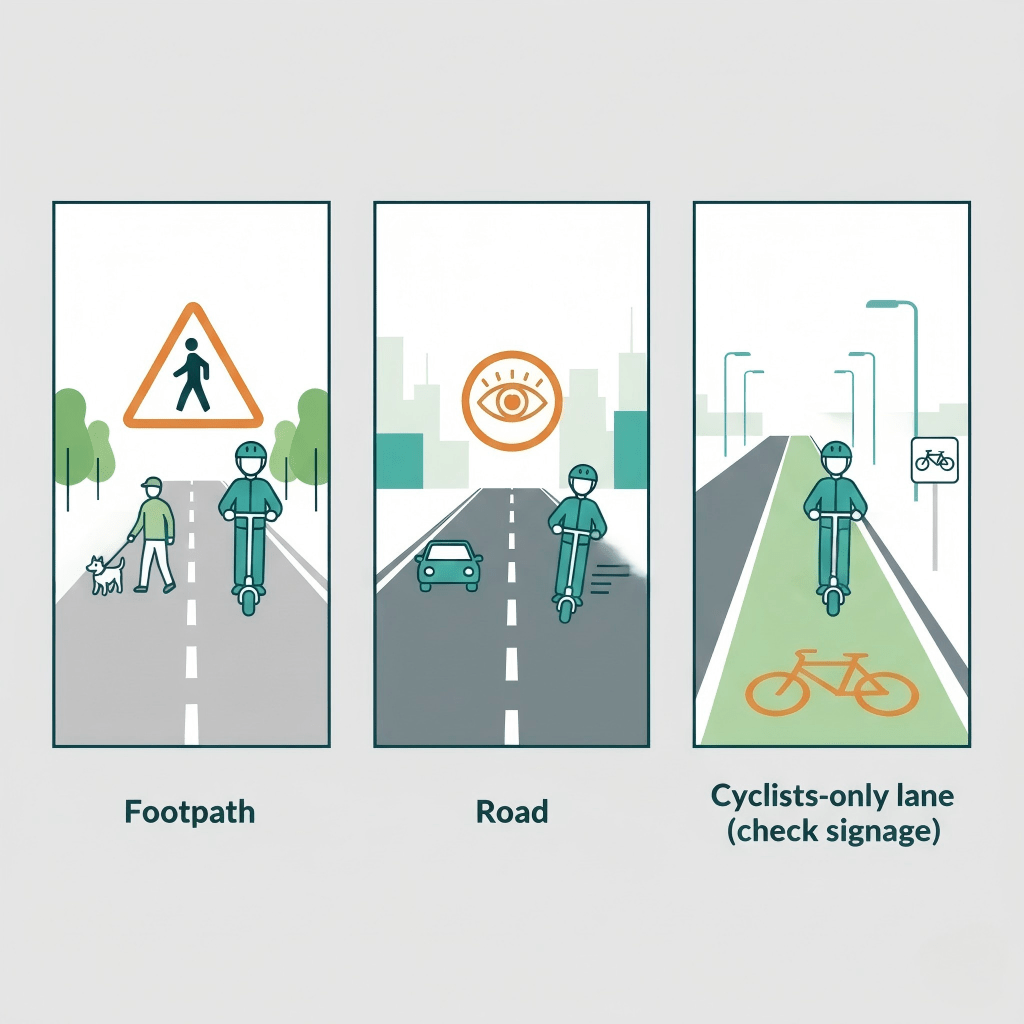
NZTA’s guidance for low-powered vehicles on footpaths boils down to three expectations: ride carefully and considerately, keep your speed safe for others, and give way to pedestrians and mobility device users. (NZTA)
A quick gut-check works better than a paragraph of rules: if you’d feel nervous with a scooter passing you in that moment, slow down. Footpaths are for people first—your commute comes second.
Road: allowed, but the risk profile changes quickly
NZTA guidance also says e-scooters can be used on the road. (NZTA)
Road riding is where small mistakes get expensive. It’s not only speed; it’s what happens when a car changes lanes, turns unexpectedly, or simply doesn’t see you.
If you’re still new, practise until steering and braking feel boring. Then go near traffic.
And yes—confidence grows faster than skill. Don’t confuse the two.
Cycle lanes: the nuance NZTA highlights
NZTA points out an exception for designated cyclists-only cycle lanes that form part of the road. Treat cycle lanes as “check first,” not “assume yes.” Signs and markings win.(NZTA)
Why this matters right now: injury claims are being discussed publicly in 2026
You can be “legal” and still be unlucky. That’s not moral judgement—it’s what happens when faster devices mix with footpaths, intersections, and new riders.
This topic got louder in early 2026 for a reason. RNZ covered newly released ACC data on 23 Feb 2026, and the story isn’t subtle: claims are rising, and younger riders appear heavily represented in the figures RNZ cited. (RNZ)
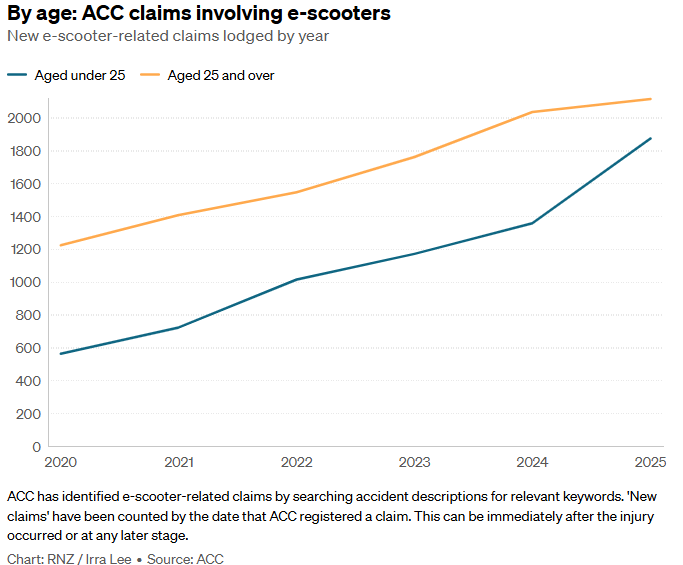
RNZ cited ACC figures suggesting that from the start of 2026 to early February, roughly half of new e-scooter claims involved people under 25—and it also highlighted a sharp jump in claims for 10–14-year-olds across recent years. (RNZ)
Credibility note (worth reading)
RNZ also noted ACC’s caveats: the figures rely on self-reports, are counted by claim registration date (not necessarily the injury date), and don’t describe severity or all circumstances (including whether the injured person was the rider or a pedestrian).(RNZ)
My view: when injury numbers become a talking point, the “soft rules” tighten—social expectations first, then policy pressure later. If you’re buying now, buy for the world you’re likely to ride in next year, not only the world you’re riding in today.
Safety: helmets, visibility, and what “responsible riding” looks like
NZTA’s safety messaging emphasises riding responsibly, being visible, and not putting pedestrians at risk. (NZTA)
On helmets, the practical argument is simple: even where the rulebook doesn’t force every scenario into one answer, a helmet is still one of the lowest-effort, highest-return choices you can make—especially while injury claims are being actively discussed in 2026.(RNZ)
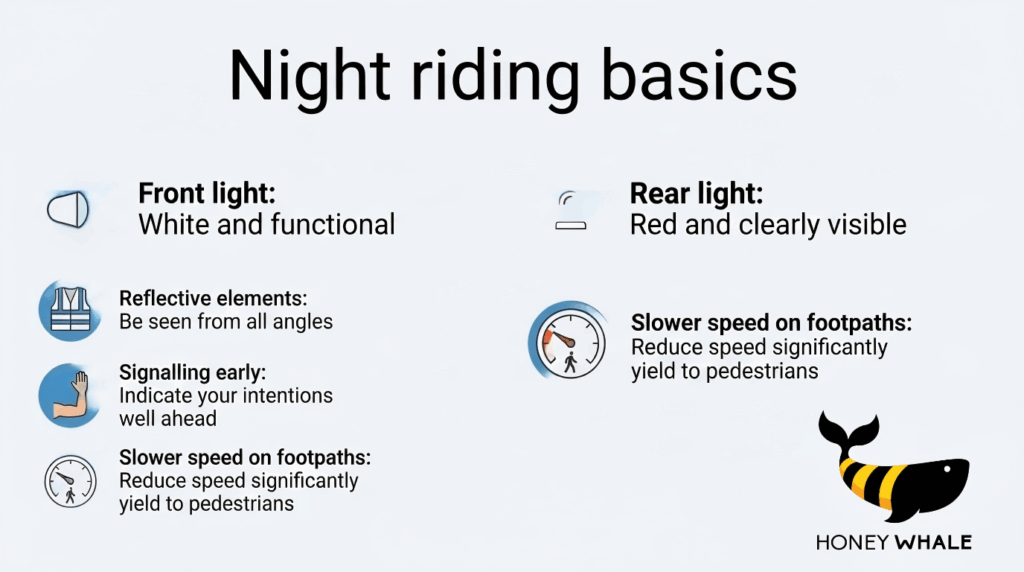
A “do this today” shortlist:
- Helmet: fit first, brand second.
- Lights: front + rear (be visible early, not late).
- Predictability: signal early; don’t weave.
- Footpaths: slow down—your stopping distance is longer than you think.
Spec sheets: why marketing language can confuse buyers
Product listings often highlight performance terms because they’re intuitive. Legal and regulatory documents, however, may use different terminology and definitions.
If you’re buying for everyday riding on public footpaths and city streets, ask the retailer to confirm the compliance-relevant wording in writing before you purchase—and keep your riding context front and centre. ( New Zealand Gazette; NZTA)
Do you need a licence, registration, or a WoF?
The Gazette notice explains that where the declaration applies, the scooter isn’t required to be registered/licensed and can be used without holding a driver licence. (New Zealand Gazette)
If your scooter doesn’t fit the declaration criteria, don’t assume it’s treated the same way. That’s the point where uncertainty stops being theoretical—and starts becoming an avoidable risk. (New Zealand Gazette)
Choosing the right category in NZ: commuter vs comfort vs performance
In New Zealand, it helps to think in categories, not just specs. The Gazette criteria (wheel size + power language) gives you a screening check, but your day-to-day riding context still matters most—especially if your routine includes shared footpaths, intersections, and busy commute routes.
Here’s a practical way to pick a category without talking yourself into the wrong purchase:
| Category | Best for | What you’re prioritising | Typical trade-offs | HoneyWhale examples |
| Light Commuter | Stairs, public transport, short daily trips | Low weight, simple maintenance, easy folding/carry | Less “plush” on rough surfaces; usually smaller tyres | (E9 Pro), (E9T) |
| Comfort Commuter | Rougher streets, heavier riders, smoother feel | Bigger tyres, more stability, suspension comfort | Heavier to carry; less “grab-and-go” | (M1 Max), (E9 Max), (E9 Max-N) |
| Utility Commuter | Errands, longer commutes, carrying gear | Seat/storage options, lighting, battery capacity, practicality | Higher weight; more “vehicle-like” | (M2 Max-B), (T4-A), (T4-B), (T4B-N), (T4-D) |
| Performance / Off-road | Torque, hills, heavier loads, off-road capability | Power platform, traction, braking, high-end features | Requires a different ownership mindset; riding context matters more | (G2 Pro), (T8), (T8 Max), (H4), (G4 Max) |
A buyer’s rule of thumb:
- If most of your riding is public footpaths and city streets, treat the Gazette criteria as a strict checkpoint and ask the retailer to confirm the compliance-relevant parameter in writing. (New Zealand Gazette)
- If you’re shopping for performance, don’t squeeze it into a commuter narrative. Buy it with eyes open: choose your riding context carefully, and prioritise safety (lights, braking, protective gear, predictability) because the consequences of mistakes scale fast with speed and weight.(NZTA)
Transparency note: This guide is educational and does not certify any specific model as “legal everywhere.” Always verify compliance-relevant parameters for your intended riding context. (New Zealand Gazette)
What if your scooter doesn’t meet the criteria?
Start with a blunt question: where will you actually ride most days?
If your day-to-day is footpaths and city streets, a compliance-first purchase is usually the calmer option long term—fewer headaches, fewer awkward conversations, fewer surprises.
And if you’re shopping for high performance, treat it as its own category of ownership. You might still love it. Just don’t pretend it’s the same riding context.
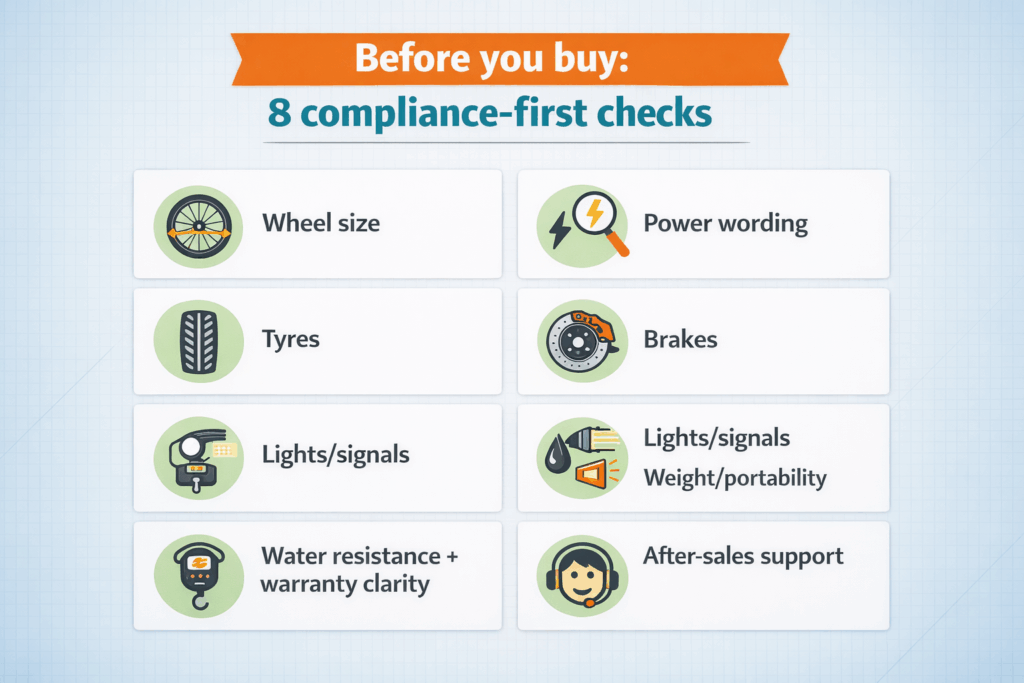
A buyer’s checklist (practical, not performative)
- Where will you ride most days—footpath, road, mixed?(NZTA)
- Do you actually understand what the retailer means by the headline specs—or are you just reading the biggest number on the page?
- Brakes: can you stop smoothly in wet conditions?
- Tyres matter more than people think. NZ surfaces aren’t uniform; pick what matches your routes, not the ad photos.
- Lights aren’t an “accessory” on a commuter ride. They’re your visibility insurance.
- Be honest: will you carry it up stairs… or will that become the reason you stop riding after week two?
- Water resistance + warranty clarity: NZ weather isn’t theoretical—your warranty shouldn’t be either.
- After-sales support: parts, servicing, clear policies.
Buyer confidence (what to look for beyond specs)
Here’s what separates a decent buy from a future headache: support you can reach, parts you can actually get, and warranty terms you can read without a magnifying glass.
HoneyWhale is a good example of what “transparent” looks like—its warranty policy is published publicly, so you can see the rules before you pay.(HoneyWhale Warranty Policy)
FAQ
Can I ride an e-scooter on the footpath in NZ?
Yes. NZTA allows e-scooters on the footpath—but only if you ride like you’re sharing the space: slow enough to be safe around others, and always give way to pedestrians and mobility device users.(NZTA)
Can I ride in cycle lanes?
Sometimes. NZTA points out an exception for designated cyclists-only cycle lanes that form part of the road. When signage/markings clearly communicate “cyclists only,” don’t assume scooters are included.(NZTA)
Why is everyone talking about e-scooter safety in 2026?
Because injury claim trends are being publicly discussed. RNZ reported ACC data indicating rising claims and a large share involving under-25s, prompting calls for stronger safety measures. (RNZ)
References
- NZ Transport Agency Waka Kotahi. (n.d.). Using e-scooters and low-powered vehicles.
- NZ Transport Agency Waka Kotahi. (n.d.). Low-powered vehicles.
- New Zealand Gazette. (2023, September 28). E–Scooters (Declaration Not to be Motor Vehicles) Notice 2023.
- Radio New Zealand (RNZ). (2026, February 23). E-scooter injuries on the rise, young people most affected.
- HoneyWhale. (n.d.). Warranty policy.