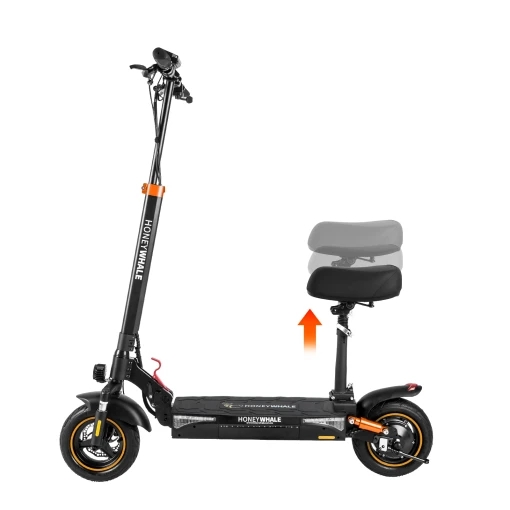

Forget the “spec wars” of 2022. In 2026, the electric scooter market has grown up.
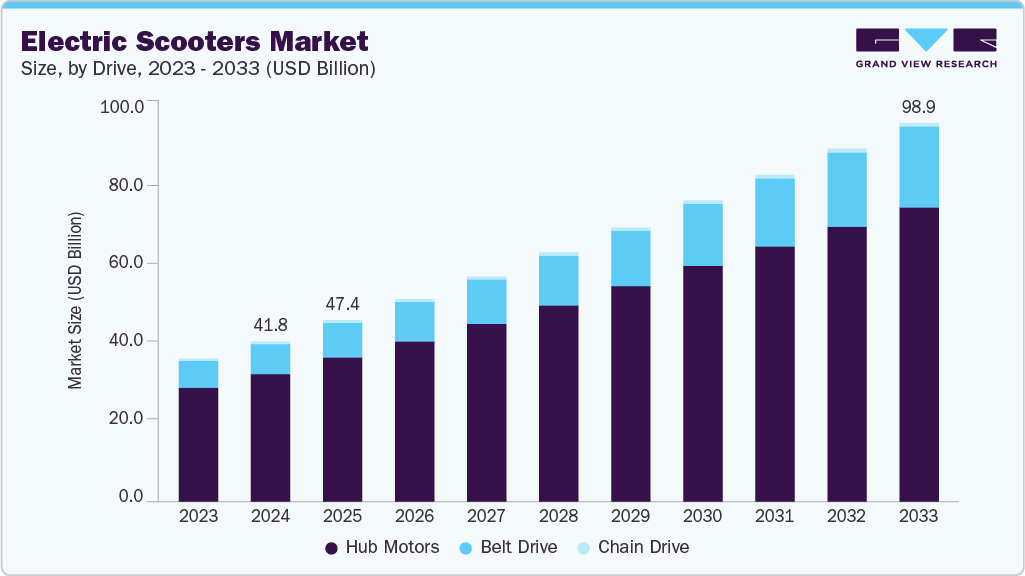
It’s no longer just about strapping a battery to two wheels and chasing top speed. The industry is maturing rapidly, now valued at approximately $42.83 billion(Research Nester, 2026). We have moved past the “wild west” era of fragile, high-speed toys meant for early adopters.
Today’s buyer is different. The flashy marketing based on theoretical top speeds has lost its luster. It has been replaced by a harder, more pragmatic demand for systemic reliability and refined interaction.
If you are buying in 2026, the question isn’t “How fast?” It’s “How dependable?”
Electric Scooters in 2026: More Than Just Transportation
The “last-mile” label is officially outdated. It’s too limiting.
In 2026, electric scooters have evolved into essential urban companions. They are lifestyle constants used for everything from weekend social rides to the daily school drop-off thread.
The paradigm shift is palpable. Manufacturers aren’t just building bigger toys; they are applying automotive-grade standards to chassis and electronics. This shift in quality has changed user behavior entirely. In fact, over 36% of urban car owners now report using their scooters to completely replace short-distance car trips.(Fortune Business Insights, 2026)
Key Electric Scooter Trends Shaping 2026
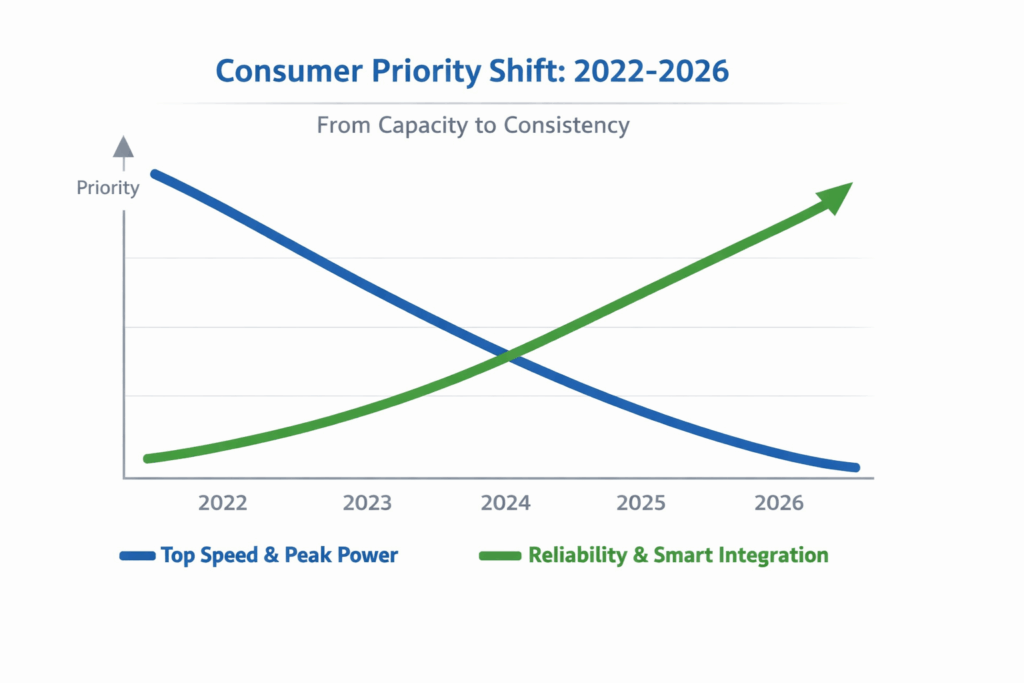
From Peak Specs to Consistent Performance
Here’s the reality check: a 64 km/h top speed is meaningless if your scooter throttles down to 24 km/h once the battery hits 40%.
The real 2026 trend is linear power delivery.The market has finally recognized that peak numbers are often marketing noise. Instead, manufacturers are shifting toward system-level power management — where the motor, controller, and battery are tuned as a single unit rather than optimized in isolation.
High-quality scooters today focus on maintaining consistent torque output across the usable battery range, ensuring the riding experience feels stable and predictable from the first kilometer to the last.It’s no longer about chasing headline speeds — it’s about reliable, confidence-inspiring power every time you twist the throttle.
The Rise of Social & Family Riding
Riding isn’t a solo act anymore. Lifestyle riders now account for nearly 60% of the market share.(Gyroor Board Statistics, 2026)
We’re seeing a surge in “Social Utility” designs. These aren’t just rugged commuters — they’re machines built for shared experiences, featuring dual-passenger weight capacities of up to 150 kg, along with integrated safety handles designed for children. In 2026, you don’t just buy a scooter for utility; you curate your aesthetic.
Software-Defined Scooters
“Hardware is the body, software is the soul.”
If a scooter can’t update itself in 2026, it’s already obsolete. Over-the-Air (OTA) updates are now as standard in micromobility as they are in automotive. Buyers expect their rides to improve after purchase—receiving upgraded regenerative braking algorithms or new “beginner modes” pushed directly via the cloud.
2026 Buying Guide: How to Choose the Right Electric Scooter
Reliability: The Most Underrated Spec
As industry veteran Luke notes, “Reliability isn’t just about not breaking; it’s about predictable behavior.”
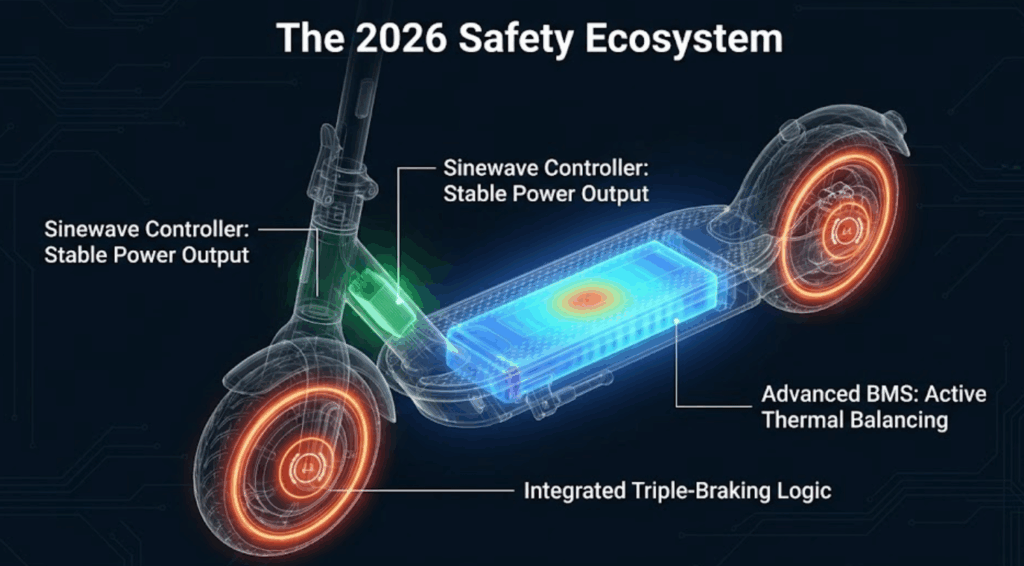
In 2026, if you want reliability, you look at the Controller. It is the critical component.
- The Sine Wave Advantage: You want Sinewave controllers. Avoid the older Squarewave models. Why? Sinewave controllers are quieter, run much cooler, and prevent that jerky, on/off acceleration that fatigues both the rider and the motor.
- The 21700 Standard: Premium models have largely abandoned the old 18650 battery cells. They now use 21700 cells, offering 25-50% higher energy density and, crucially, significantly better thermal management for longer life cycles(Dynamic Scooter, 2026).
Safety Beyond Brakes (A Systemic Approach)
Safety in 2026 is systemic, not mechanical only. Modern Battery Management Systems (BMS) monitor individual cell voltages in real time and prevent thermal stress before it escalates — a safety progression that mirrors broader electric vehicle practices. Grand View Research
Best-in-class scooters synchronize regenerative braking, hydraulic systems, and mechanical systems to deliver balanced, anti-skid deceleration in a unified braking experience.
Design as Identity
In urban professional circles, a scooter’s “finish” matters as much as a luxury watch. Premium brands are moving toward integrated cable routing (no messy visible wires) and automotive-grade paint that resists UV fading. It has to look good parked in the lobby.
Smart Features That Actually Add Value
Ignore the bloat. In 2026, the only smart features worth paying for are practical ones:
- Smart Locking & Geofencing: If the scooter moves without your phone presence, it locks the motor and pings your GPS.
- Adaptive Mode Switching: Sensors that detect pedestrian density zones and automatically cap speed to comply with local regulations.
Who Are You? Finding Your 2026 Match
To choose correctly, don’t look at specs first. Look at your routine. Match your scooter to your actual life persona.
Table 1: Rider Persona Comparison Matrix
| Persona | Key Priority | Ideal Model Profile |
| The Urban Professional | Portability & Image | Ultra-lightweight (<30lbs), carbon fiber finish, rapid 3-second fold mechanism. |
| The Weekend Explorer | Ride Quality & Range | Dual-suspension systems, large 10-inch tubeless tires, 40+ mile real-world range. |
| The Modern Parent | Safety & Payload | Reinforced wide deck, high-torque motor for carried weight, mandatory UL 2272 certification. |
| Rider Profile | Core Needs | Best Fit Models | Why It Works |
| The Urban Professional | Portability | E9 Pro / E9T / H4 | Lightweight handling for easy carry and storage |
| Low maintenance | Smooth, linear acceleration for city traffic | ||
| Predictable daily commuting | Smart control systems that reduce daily hassle | ||
| H4 adds extra stability without sacrificing city usability | |||
| The Weekend Explorer | Ride comfort | E9 Max / G2 Pro / G4 MAX | Stable frame geometry for longer rides |
| Suspension performance | Enhanced suspension for uneven roads | ||
| Real-world riding range | Endurance-focused design built for distance, not just specs | ||
| The Modern Parent | Safety confidence | T4-A / T4-B | Balanced structural design with a low center of gravity |
| Load stability | System-level safety engineering across battery, controller, and braking | ||
| Easy and intuitive control | Predictable handling suitable for family-oriented use | ||
| The Performance Seeker | Strong power output | T8 MAX | 2000W (1000W ×2) dual-motor system for instant torque |
| All-terrain capability | Enhanced shock absorbers and 12” off-road tubeless tyres | ||
| High-speed stability | Strong climbing ability suited for hilly regions like New Zealand | ||
| Confident hill climbing | High-speed stability with advanced braking and lighting systems |
Final Thoughts: The Best Scooter Is the One You Love Riding
The era of disposable, unreliable scooters is closing. The 2026 market belongs to vehicles that are Safe, Reliable, and Smartly Integrated.
If you are buying this year, don’t let a spec sheet distract you with “Max Speed.” Instead, ask about the controller type. Ask about the frame material. Ask about the software update frequency. The best electric scooter in 2026 isn’t the one that wins a drag race. It’s the one that starts every morning without a glitch, keeps you safe on a wet corner, and feels like a seamless extension of your daily life.
References & Data Resources
- Research Nester (2026): Electric Scooter Market Size, Share & Forecast 2035. Source
- Fortune Business Insights (2026): Global Micro-Mobility Market Outlook 2026-2034. Source
- UL Solutions (2025/2026): UL 2272: Standard for Electrical Systems in Personal E-Mobility. Source
- Kaabo USA Industry Report (2026): Trends in Torque Delivery and Controller Stability. Source
- Dynamic Scooter Tech (2025/2026): Graphene and 21700 Battery Integration in Micromobility. Source
- Gyroor Global Survey (2026): E-Scooter Demographic Shifts and Leisure Usage Statistics. Source
- McKinsey Center for Future Mobility (2025): The Road to Profitability for Shared and Personal Micromobility. Source