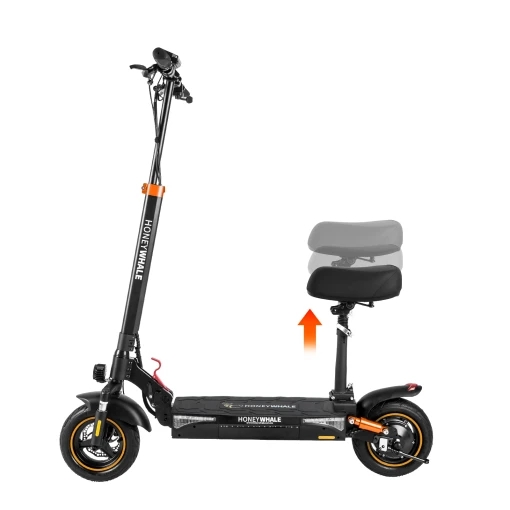

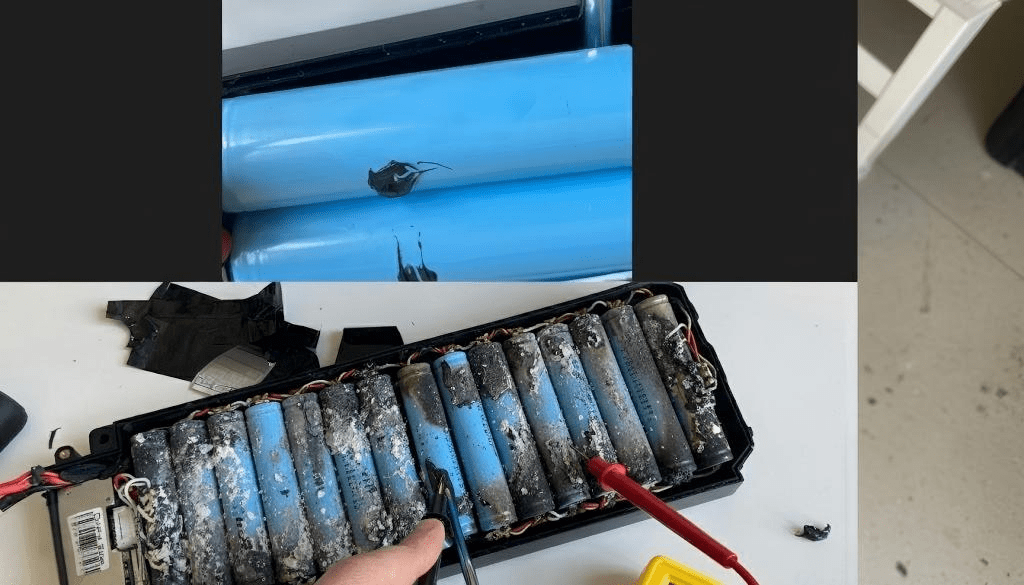
I was poking around a damp repair workshop in Morningside last week. The tech there — a guy who’s seen more fried circuitry than I’ve had hot dinners — showed me something that genuinely turned my stomach.
It was a battery pack from a mid-range commuter scooter. It hadn’t crashed. It hadn’t been submerged. It had literally cooked itself into a useless, warped brick.
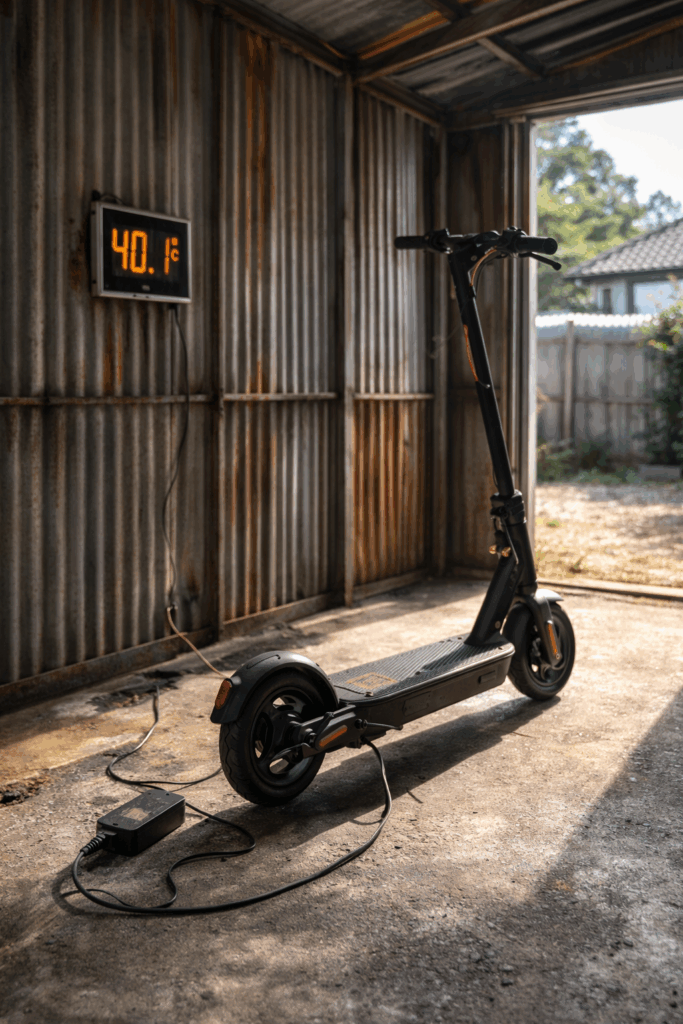
Why? Because the owner kept charging it in a corrugated tin shed during that brutal February heat. In New Zealand, that combo of high UV + hot, stagnant air is a quiet battery killer — and it’s why “battery replacement” has become one of the most expensive surprises for everyday riders.
If you want the practical, model-agnostic checklist we give our own customers, start with Honey Whale’s battery maintenance guide — it’s the boring stuff that saves you hundreds.
(Honestly, it’s also the difference between “my scooter just works” and “why is my range suddenly awful?”)
Quick Summary: NZ Summer Battery Safety Rules (2026 Edition)
If you want to avoid a dead e-scooter battery, follow these four golden rules:
- The 30-Minute Cool-Down: Never plug in immediately after a ride. Let the pack settle for 20–30 minutes first.
- The Shade Rule: If it’s too hot for a dog to nap there, don’t charge your scooter there.
- Original Gear Only: Use the correct, manufacturer-matched charger. If you’re not 100% sure what “correct” means, this is exactly why we maintain a dedicated charger range by model.
- Ventilation Is King: Avoid tin sheds and closed garages. Charging needs airflow to dump heat.
If you want a more formal, step-by-step safety list (the kind you’d share with a family member), Honey Whale also has a pre-ride and charging precautions page that covers the basics clearly.
The “Oven Effect”: Why Your Backyard Shed Is a Localised Micro-Climate
We’re all obsessed with range anxiety while we’re out on the road, glancing at that battery bar as we tackle the hills of Wellington or Auckland’s North Shore. But in 2026, we should be losing sleep over something else:
Thermal anxiety. At home.
NIWA’s climate reporting gives a useful “big picture” view of NZ temperatures — and the bigger story is that warmth and heat events are not going away.
But here’s what riders forget: NIWA measurements are taken under controlled conditions. Your shed isn’t “the weather.” It’s a metal box that stores heat.
Walk into a corrugated iron shed at 3 pm in summer and you can feel it instantly: the air is thick, stale, and hot. Trying to charge a lithium battery in that environment is like forcing someone to run a marathon in a puffer jacket.
Charging is a friction-heavy chemical process. It creates its own heat. So when internal heat meets a stagnant, already-hot room, you get a nasty compounding effect: faster degradation, lower capacity, and a battery that ages before its time.
And yes — I’m going to say the uncomfortable part: most battery “failures” we see aren’t mystery defects. They’re lifestyle problems.
Let’s Kill the “Smart Battery” Myth
Manufacturers love bragging about “safe operating ranges.” It sounds reassuring. It sells scooters.
But here’s the truth: a Battery Management System (BMS) is a safety net, not a personal butler. It may cut off power when things get truly dangerous, but it won’t stop slow chemical decay if you keep baking the pack day after day.
Fire and Emergency New Zealand’s battery safety guidance is blunt about the big risk factors: damaged packs, incorrect charging, and poor handling can lead to fires. That’s the “acute” risk.
The “chronic” risk is more boring: heat-accelerated wear that silently steals your range. You don’t notice it until you do.
This is also where brand discipline matters. One reason Honey Whale pushes “correct charger by model” so hard is that mismatched chargers create unstable charging behaviour — and in summer heat, instability is exactly what you don’t want.
Why Direct Sunlight Is the Ultimate Enemy
Even on a mild day, direct sun on a black deck or battery casing can push surface temps into the danger zone surprisingly fast. Balconies, concrete floors, and “sunny corners” near a garage door are classic traps.
Concrete is a heat sponge. Riders assume the floor is “cool,” but after it’s absorbed sunlight, it radiates heat back up into the scooter’s deck — a slow-cooker effect right where the battery lives.
If you want one simple habit that works: charge in shade, on a ventilated surface, away from sun-soaked concrete. Not glamorous. Highly effective.
The Science of “Baking” Your Battery (Without Turning This Into a Chemistry Lecture)
Some riders swear their scooter feels punchier when the battery is warm. That can be true in the short term — lower internal resistance. But it’s a trap.
Repeated high-temperature charging can accelerate unwanted side reactions inside lithium-ion cells. Over time, those reactions reduce usable capacity and increase internal resistance — which ironically makes the scooter feel weaker later.
This is where I take a strong stance: “Feels fine today” is not a battery health strategy.
If your goal is to keep your scooter running well into 2028–2030, treat heat like a debt. It always gets repaid — with interest.
4 Summer Sins (And How to Stop Them)
I spend too much time in NZ micromobility groups, and the same mistakes repeat every summer.
1) The “Rush to Juice”
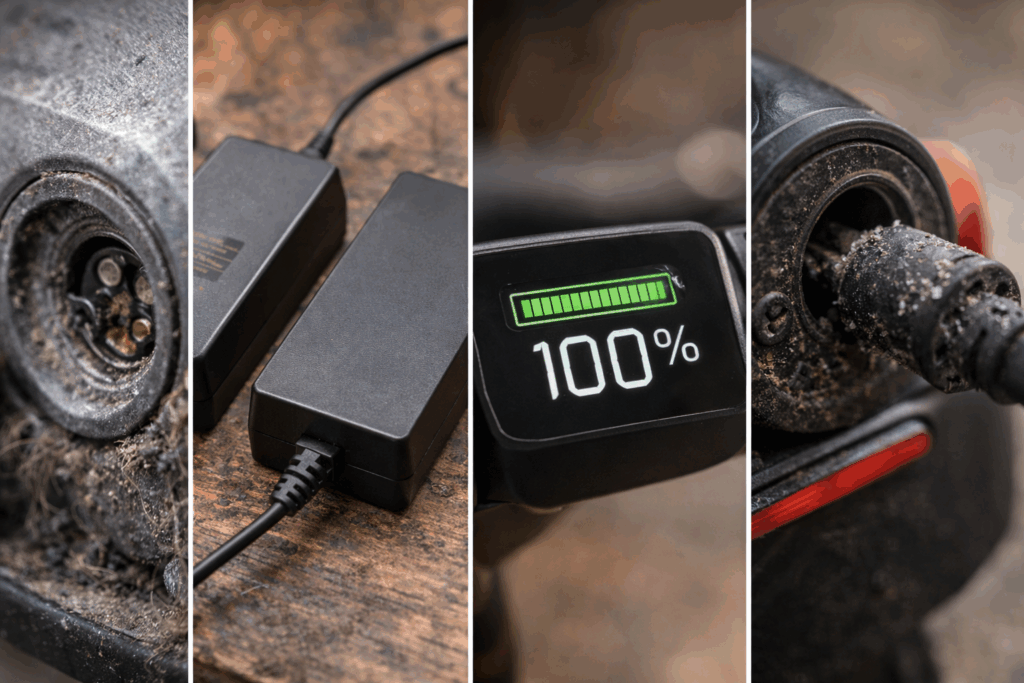
You get home. You’re sweaty. The scooter is humming with heat from the commute. You immediately plug it in. Stop. Your cells are still “settling” from the discharge heat of the ride. Adding a charging load now is just brutal. Give it at least 20–30 minutes. Grab a beer, watch the cricket, let the thing breathe. Your lithium battery charging safety depends on this one tiny habit.
2) The Cheap Charger Gamble
I get the temptation. A replacement factory charger is $150; the one on that random site is $40. But those cheap bricks are “dumb.” They often have unstable current delivery or mismatched voltages. In the heat, that lack of “talk” between the charger and your battery is a recipe for a dead pack or, worse, a fire. The experts at Fire and Emergency NZ (2025) always say: use the manufacturer-approved gear. Saving $100 on a charger could cost you $1000 in repairs.
So here’s the non-negotiable: use the correct charger for your model. If yours is missing, replace it properly — this is why we keep a dedicated Honey Whale charger category instead of leaving customers to guess.
3) The 100% Obsession
Do you really need a full tank for a 5km trip to the dairy? Leaving a lithium battery at 100% in 30-degree weather is like leaving a balloon over-inflated in the sun. It’s under massive chemical tension. If you’re not riding for a few days, try storing it at 70–80%. It significantly reduces long-term wear and stress on the cell chemistry.
4) Ignoring the Port
NZ summer means dust and sometimes coastal salt spray if you’re riding near Mission Bay or Oriental Parade. If your charging port is dirty, it increases resistance. Resistance equals more heat. A quick check of your cables and ports for corrosion or dust can make a measurable difference in your e-scooter maintenance routine.
The Money: Peanuts vs. Portions
Everyone asks about the cost to charge an electric scooter in NZ. They expect a shock when the bill arrives.
The twist: electricity cost is usually the small number. Battery damage is the big one.
MBIE’s electricity cost and price monitoring makes it clear that pricing varies by region and plan — so any single “c/kWh” number is only a working example.
Charging Cost Breakdown (Estimated at $0.30/kWh)
| Scooter Type | Battery Capacity | Energy Used per Full Charge | Estimated Cost |
| Commuter | 500Wh | 0.5 kWh | $0.15 |
| Mid-Range | 800Wh | 0.8 kWh | $0.24 |
| Performance | 1200Wh | 1.2 kWh | $0.36 |
Formula Used: Cost per charge = (Battery Wh ÷ 1000) × Electricity price per kWh
You could charge every day for a month and barely feel it.
The real cost is the $900–$1,200-style replacement hit when a pack degrades early because it’s been slow-cooked in a tin shed all summer.
If you want the “what happens if my battery is already failing?” pathway, it’s better to send riders to a real solution rather than vague advice — Honey Whale’s battery category is the cleanest internal destination.
Is Fast Charging “Evil”?
Not evil. Just misunderstood. Fast charging pushes higher current, which creates more heat. In winter, that might be fine. In February heat, it’s a risk multiplier.
If your scooter supports a lower-amp option, use it in peak summer. Think long-term battery health, not instant convenience.And again: the charger matters. “Correct voltage and matched spec” isn’t marketing — it’s basic safety engineering.
The “She’ll Be Right” Culture vs. Reality
That classic Kiwi attitude is iconic. It’s also why batteries die early.
ACC data released through official OIA responses shows the scale of e-scooter injury claims over time — complacency has a cost.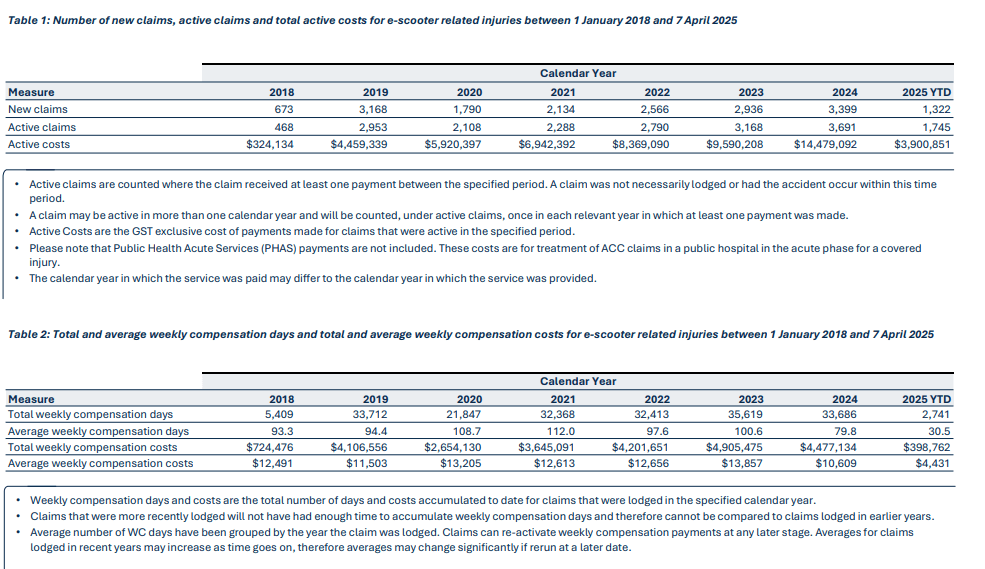
Now, injury risk and battery fire risk aren’t the same problem, but they share the same root cause: treating high-energy devices casually.
Safe riding isn’t only about potholes. It’s also about not turning your garage into a thermal hazard.
The Final Word: Be the Radiator
Your e-scooter is high-energy chemistry wrapped in metal. No radiator. No active cooling. It relies on you to be the thermal management system.
So be kind to it:
- Let it cool down
- Charge in shade
- Use the correct charger
- Keep airflow moving
And if you want the part that most brands dodge: warranty clarity matters. For the official details of Honey Whale’s coverage and conditions, link readers to the Warranty policy.and (for water ingress conditions) the Terms & conditions.
Ride smart. Charge smarter.
References
- Accident Compensation Corporation (ACC). (2025, April 11). Data on e-scooter claims (OIA response GOV-039171) [PDF].
- Fire and Emergency New Zealand (FENZ). (n.d.). Lithium-ion battery safety.
- Ministry of Business, Innovation & Employment (MBIE). (2025, December 11). Electricity cost and price monitoring.
- Ministry of Business, Innovation & Employment (MBIE). (2025, November 15). Quarterly Survey of Domestic Electricity Prices (QSDEP) [PDF].
- National Institute of Water and Atmospheric Research (NIWA). (2025, January 8). Annual climate summary 2024.
- Honey Whale. (n.d.). Maintenance guide.
- Honey Whale. (n.d.). Charger category.
- Honey Whale. (n.d.). Battery category.
- Honey Whale. (n.d.). Precautions page.
- Honey Whale. (n.d.). Warranty policy.
- Honey Whale. (n.d.). Terms & conditions.